Table of Contents
ToggleOrlando homes face unique design challenges that Denver or Seattle homeowners never consider. The relentless humidity warps wood, fades fabrics, and turns the wrong paint choice into a mildew magnet. Add year-round sun exposure, open-plan layouts built for air circulation, and a cultural blend of Southern comfort and coastal ease, and suddenly, interior design isn’t just about aesthetics. It’s about durability, climate response, and livability. Whether renovating a mid-century ranch in Winter Park or refreshing a new-build townhouse near Lake Nona, Central Florida homeowners need design strategies that look great and survive the subtropics.
Key Takeaways
- Orlando interior design must prioritize moisture-resistant materials like engineered hardwood and luxury vinyl plank because humidity regularly reaches 60-70% and warps solid wood flooring.
- Interior design in Orlando works best with performance fabrics, fade-resistant paint, and UV-blocking window treatments to combat year-round sun exposure and prevent mildew on upholstery.
- Coastal, tropical, and modern farmhouse styles dominate Orlando’s interior design market and align naturally with the region’s climate, cultural diversity, and need for open-plan layouts that promote air circulation.
- DIY interior design projects like shiplap accent walls, cabinet refinishing, and window film application deliver major visual updates for Orlando homeowners without the cost of full renovations.
- Sourcing interior design materials locally through Winter Park boutiques, Floor & Decor, and consignment galleries gives Orlando residents access to climate-appropriate pieces and sustainable options at competitive prices.
Why Orlando’s Unique Climate and Culture Shape Interior Design Choices
Humidity is the silent design assassin in Central Florida. Interior relative humidity regularly hits 60-70% even with AC running, which means solid hardwood flooring can cup and warp. Engineered hardwood or luxury vinyl plank (LVP) with rigid cores handle moisture swings better. Upholstered furniture needs performance fabrics, polyester blends treated for moisture resistance or outdoor-grade textiles like Sunbrella that resist mold and mildew.
UV exposure through large windows and sliding glass doors fades paint, fabrics, and even some hardwoods. South- and west-facing rooms take the worst beating. Solar shades, UV-blocking window film, or cellular shades cut heat gain and protect finishes. When choosing paint, go for fade-resistant formulas with higher-quality pigments, many major brands now label exterior paints with fade resistance ratings that apply indoors, too.
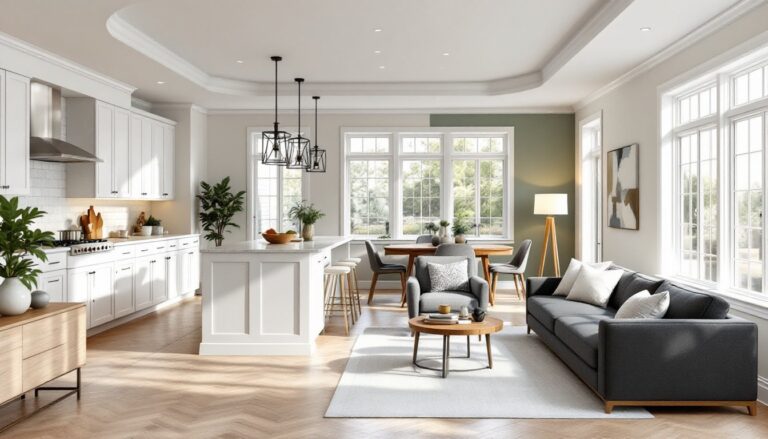
Orlando’s open floor plans reflect both climate and lifestyle. Builders favor great-room layouts for better air circulation and to accommodate multi-generational living common in Florida’s diverse population. Design must define zones without blocking airflow: area rugs, furniture arrangement, and ceiling treatments (like coffers or beams) create visual separation while keeping sightlines open.
Cultural influences layer in coastal, Caribbean, and Southern styles. Expect to see rattan, wicker, and bamboo alongside shiplap and reclaimed wood. Colors lean toward sand, seafoam, coral, and sun-bleached blues rather than the grays and charcoals popular in northern markets. This isn’t just aesthetic preference, lighter tones reflect heat and pair well with the bright natural light Florida homes receive year-round.
Popular Interior Design Styles for Orlando Homes
Coastal and Tropical-Inspired Interiors
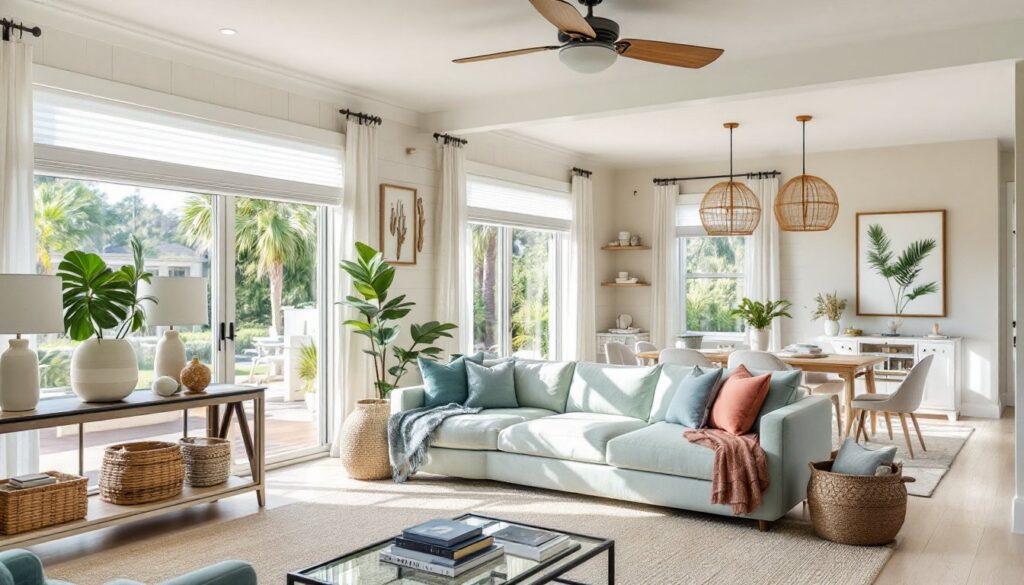
Coastal design dominates Orlando’s residential market, even though the Atlantic is an hour east. The style emphasizes natural light, breezy textiles, and weathered finishes. Think whitewashed shiplap, jute rugs, linen slipcovers, and driftwood accents. Wall colors stay in the white-to-sand range (Benjamin Moore’s White Dove or Sherwin-Williams’ Sea Salt are perennial favorites).
Tropical interiors push bolder: jewel-toned accent walls (emerald, teal, coral), large-leaf botanical prints, and natural materials like rattan and teak. Wallpaper with palm fronds or monstera leaves works as an accent wall in powder rooms or behind beds. Overhead fans are functional necessities but also design elements, look for wide-blade models in natural wood or matte black that move serious air without the builder-grade look.
Both styles benefit from interior home design ideas that balance aesthetics with Florida’s climate realities. Avoid heavy drapes and dark wood paneling, they trap heat and fight the airy, open feel these styles aim for. Instead, layer textures: sisal rugs, linen throws, ceramic lamps, and woven baskets add depth without visual weight.
Modern Farmhouse and Contemporary Florida Living
Modern farmhouse has taken root in Orlando’s suburban sprawl, especially in new developments around Clermont and Oviedo. The style blends shiplap, barn doors, and neutral palettes with industrial lighting and clean-lined furniture. In Florida’s context, skip the heavy reclaimed barn beams (they’re pricey and tonally off) and lean into painted shiplap, matte black fixtures, and quartz countertops that mimic marble without the maintenance.
Contemporary Florida design strips things down further: open shelving, minimalist cabinetry, large-format tile, and sleek finishes in white, gray, and black. Flooring often uses 12×24-inch or larger porcelain tile in wood-look or concrete finishes, cool underfoot and impervious to humidity. According to Elle Decor, contemporary interiors increasingly incorporate natural wood tones to soften the starkness, a smart move in Florida where all-white can feel sterile under intense sun.
Both styles favor open shelving in kitchens, but in Orlando’s humidity, glass-front cabinets are smarter, they show off dishware while protecting it from moisture and dust. When selecting hardware, go for stainless steel or solid brass rather than plated finishes that corrode in humid air.
Essential Design Elements for Orlando Interiors
Flooring: Skip solid hardwood in high-moisture areas (entryways, kitchens, bathrooms). Engineered hardwood with a wear layer of at least 3mm handles humidity better. Luxury vinyl plank with rigid core (SPC or WPC) is 100% waterproof and available in convincing wood-look finishes. For tile, porcelain rated for indoor use with a matte or textured finish prevents slips in humid conditions. Grout lines should use epoxy grout in wet areas, it resists mold and doesn’t require sealing.
Paint and Wall Treatments: Use mold- and mildew-resistant paints in bathrooms, laundry rooms, and kitchens. Sherwin-Williams Duration and Behr Premium Plus both offer moisture-resistant formulas. Flat and matte finishes show every flaw in Florida’s bright light: eggshell or satin hides imperfections and wipes clean. Accent walls in removable wallpaper add pattern without permanent commitment, just ensure the wall is properly primed to prevent moisture seeping behind the paper.
Window Treatments: Cellular (honeycomb) shades provide insulation and light control. For sliding glass doors, vertical blinds or panel tracks in moisture-resistant materials (vinyl, faux wood, or polyester) work best. Solar shades block UV without eliminating views, ideal for lakefront or golf-course homes. Avoid fabric Roman shades in bathrooms: humidity causes sagging and mildew. Crafting thoughtful home decor and interior choices means prioritizing materials that withstand Central Florida’s conditions.
Lighting: Recessed LED lighting is energy-efficient and generates less heat than incandescent bulbs, critical when AC is running nine months a year. Use dimmer switches to adjust for Florida’s variable daylight. Ceiling fans should have a minimum blade span of 52 inches for rooms over 225 square feet: anything smaller just stirs hot air. In coastal or tropical interiors, rattan or woven pendant lights add texture: in contemporary spaces, go for industrial metal or glass globes.
Furniture and Textiles: Look for performance fabrics rated for 30,000+ double rubs (abrasion resistance). Crypton, Sunbrella, and Revolution are top brands. Leather and faux leather can feel sticky in humidity, if you love the look, choose top-grain leather treated with breathable finishes. Outdoor furniture (aluminum, resin wicker, teak) increasingly migrates indoors for Florida rooms and lanais: it’s designed to handle moisture and resists fading. Rugs should be synthetic or natural fibers with low pile, high-pile wool traps moisture and dust. Jute, sisal, and polypropylene are better choices.
DIY Interior Design Projects Perfect for Orlando Homeowners
Accent Wall Installation: Shiplap or board-and-batten treatments add architectural interest without major construction. Use 1×6 or 1×8 pine boards (actual dimensions: ¾” × 5½” or 7¼”). Acclimate boards indoors for 48 hours before install to prevent gapping in AC-controlled spaces. Attach with a brad nailer and 18-gauge nails, then caulk seams and paint with semi-gloss for easy cleaning. Vertical board-and-batten visually raises low ceilings common in older Florida ranch homes.
Cabinet Refresh: Painting kitchen cabinets transforms a space for under $500 in materials. Remove doors and hardware, clean with TSP, sand with 120-grit, prime with bonding primer (like Zinsser B-I-N or KILZ Adhesion), and apply two coats of cabinet-grade paint (Benjamin Moore Advance or Sherwin-Williams Emerald Urethane). Use a foam roller for flat surfaces and a fine brush for edges. Let cure 7 days before reattaching doors. Replace dated brass pulls with matte black or brushed nickel hardware, an instant modern upgrade.
Window Film Application: DIY window film cuts UV and heat gain. Measure each pane, order residential solar control film (Gila or 3M), and apply with soapy water and a squeegee. Takes about 15 minutes per window. This won’t replace low-E glass but adds protection for under $2 per square foot. Homeowners exploring new home interior options can use film to test tint levels before committing to replacement windows.
Floating Shelves: Open shelving in kitchens or living rooms provides display space without the bulk of cabinets. Use 2×10 or 2×12 boards (actual: 1½” × 9¼” or 11¼”) cut to length, stained or painted, and mounted with heavy-duty floating shelf brackets rated for 50+ lbs. Locate studs with a stud finder and secure brackets with 3-inch screws. Level is critical, use a 4-foot level or laser level for spans over 3 feet. Style with a mix of functional items (cookbooks, dishes) and decor (plants, art) to avoid the staged look seen on Houzz.
Ceiling Fan Replacement: Swapping a builder-grade fan for a modern model is straightforward if an existing electrical box is rated for fan support (check the label: it must say “Suitable for Fan Support” and be rated for the fan’s weight). Turn off power at the breaker, remove the old fan, and install the new mounting bracket. Wire according to manufacturer instructions: black to black (hot), white to white (neutral), green or bare copper to ground. Use wire nuts rated for multiple conductors and wrap with electrical tape. If the box isn’t fan-rated, hire an electrician, improper support is a code violation and safety hazard.
Safety note: Wear safety glasses during install projects, use a dust mask when sanding or painting, and ensure proper ventilation. Ladder safety matters, use a stable, appropriately rated step ladder and keep your belt buckle between the rails.
Where to Source Furniture and Decor in the Orlando Area
Local Retailers: Orlando’s design scene centers around Winter Park and Thornton Park, where independent boutiques carry coastal and tropical furniture. Greenlife Furniture (multiple locations) specializes in modern and mid-century pieces with in-stock availability. Royal Furniture offers a range of styles at mid-range price points. For outdoor furniture that doubles as indoor pieces, Watson’s on Orange Avenue has teak and all-weather wicker.
Home Improvement Chains: The Home Depot and Lowe’s stock LVP, tile, paint, and hardware at competitive prices. Both offer free design consultations and 3D planning tools online. For more specialized materials (wide-plank engineered hardwood, decorative tile, custom closet systems), Floor & Decor on International Drive has a huge selection and knowledgeable staff. Serious renovators appreciate home interior design software to visualize changes before purchasing materials.
Discount and Consignment: HomeGoods and At Home (locations across metro Orlando) offer budget-friendly decor, though selection is hit-or-miss. Consignment Galleries of Florida in Longwood carries gently used furniture at 40-60% off retail. Estate sales are common in established neighborhoods like College Park and Audubon Park, check EstateSales.net for listings. DIYers willing to refinish can score solid wood furniture for a fraction of new prices.
Online and Delivery: Wayfair and Overstock deliver to Orlando with reasonable shipping costs. For high-end pieces, Article offers modern furniture with flat delivery fees. Many local retailers now price-match online competitors if you show proof. Facebook Marketplace and Craigslist are goldmines for used furniture, but inspect carefully for mold, mildew, or pest damage, common issues in humid storage. Platforms like Homedit often feature affordable furniture finds and styling ideas that translate well to Florida interiors.
Custom and Trade: For built-ins, custom cabinetry, or upholstery, Orlando Custom Carpentry and Sofa U Love (custom upholstery) work with homeowners directly. Expect to pay 20-40% more than stock options but get exact sizing and fabric choices. If working with a designer who has trade accounts, you’ll access to-the-trade showrooms in the Design District (near IKEA on International Drive) at contractor pricing, often 20-30% below retail.