Table of Contents
ToggleBaroque never really left, it just learned to play nice with IKEA. Modern baroque interior design takes the opulence, drama, and craftsmanship of 17th-century European palaces and strips away the excess, leaving a look that’s bold without being over-the-top. Think gilded mirrors paired with sleek marble countertops, velvet armchairs against stark white walls, or a crystal chandelier hanging in a minimalist loft. It’s a style that rewards DIYers willing to mix periods, layer textures, and take some measured risks. And unlike a full historic restoration, modern baroque doesn’t require a palace or a trust fund, just a good eye and some strategic upgrades.
Key Takeaways
- Modern baroque interior design balances opulent, 17th-century European design elements with clean, contemporary silhouettes by using statement pieces and restraint rather than covering every surface in ornamentation.
- Luxurious textures like velvet, silk, and marble paired with metallic accents (gold, brass, bronze) are essential to modern baroque, and mixing hard reflective surfaces with soft textiles prevents spaces from feeling cold or sterile.
- Key architectural and decorative elements—such as ornate mirrors, carved wooden furniture, chandeliers, crown molding, and ceiling medallions—create drama when isolated as focal points surrounded by visual breathing room and neutral wall treatments.
- Modern baroque works in any room by adapting its core principles: bedrooms benefit from carved or upholstered headboards and layered bedding, while dining rooms shine with formal tables, chandeliers, and rich jewel-tone wall colors.
- Color palettes should combine rich jewel tones (emerald, sapphire, ruby) with at least two neutrals and metallic finishes to maintain visual hierarchy and prevent the space from becoming visually overwhelming.
- Strategic hardware upgrades (brass or bronze cabinet pulls, door handles, light switch plates) and statement pieces sourced from vintage or secondhand stores make modern baroque achievable without professional decoration or significant budget constraints.
What Is Modern Baroque Interior Design?
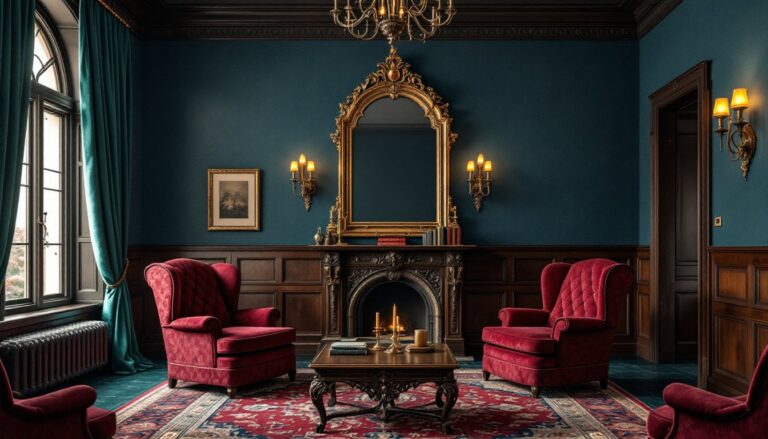
Modern baroque is a hybrid style that borrows the grandeur and ornamentation of Baroque architecture, think France and Italy, circa 1600s, while keeping the silhouette clean and contemporary. Traditional Baroque interiors were all about symmetry, dramatic curves, gilded everything, frescoed ceilings, and furniture carved like sculpture. Modern baroque keeps the carved curves and metallic accents but dials back the volume.
The key difference is restraint. Instead of covering every surface in gold leaf and tapestries, modern baroque uses statement pieces: one ornate mirror, a single velvet sofa, or a sculptural console table. The rest of the room stays neutral, with clean lines and open space. This approach makes the style livable for everyday homes and easier to execute without hiring a professional decorator.
It’s also surprisingly DIY-friendly. You’re not replicating museum-grade molding or commissioning custom murals. You’re shopping for the right pieces, mixing finishes, and using contrast to make a few dramatic elements pop. Understanding the balance between old-world opulence and modern simplicity is what makes the style work, and what separates it from looking like a costume party.
Key Elements That Define Modern Baroque Style
Modern baroque lives at the intersection of luxury and livability. Get the foundational elements right, and the style comes together without looking forced.
Luxurious Textures and Rich Materials
Texture does the heavy lifting in modern baroque. Velvet, silk, and brocade bring that historical richness, while metals, brass, gold, bronze, and even blackened iron, add visual weight and contrast. Start with upholstery: a velvet sofa or a pair of tufted dining chairs can anchor a room. Velvet works especially well because it catches light and creates depth without pattern.
Marble and stone are also staples. A marble coffee table, a stone fireplace surround, or even marble-look porcelain tile (which runs about $6–$12 per square foot depending on quality) can bring in that palatial feel. Pair hard, reflective surfaces with soft textiles, a faux fur throw, a silk pillow, or a wool area rug with a low pile. The mix keeps the room from feeling cold or sterile.
Mirrors are non-negotiable. An oversized mirror with a gilded or carved frame reflects light and adds dimension. Hang it opposite a window to bounce natural light, or use it as a focal point over a console table or mantel. If you’re thrifting or shopping estate sales, look for vintage frames and have the glass replaced if needed, frame shops can cut new mirror glass to fit for around $50–$100 depending on size.
Ornate Details Meet Minimalist Balance
Modern baroque pulls off drama by pairing ornate details with minimalist restraint. One carved headboard, not five. One chandelier, not a dozen sconces. The ornamentation stands out because there’s visual breathing room around it.
Crown molding and ceiling medallions are classic baroque touches that translate well into modern homes. Installing a polyurethane crown molding (which costs about $1–$3 per linear foot and can be cut with a miter saw) adds architectural interest without the weight or cost of plaster. Ceiling medallions, often made from lightweight urethane, can frame a chandelier or pendant light and cost between $30–$150 depending on diameter and detail.
Keep wall treatments simple. Many modern baroque living rooms use solid paint in deep jewel tones or crisp whites to let furniture and fixtures shine. If you want pattern, choose one wall for a damask or floral wallpaper and keep the rest neutral. Wallpaper installation is a solid DIY project if you’re patient, use a plumb line, a smoothing tool, and a sharp utility knife for clean seams.
How to Incorporate Modern Baroque in Every Room
Modern baroque adapts to any room, but the approach changes based on function.
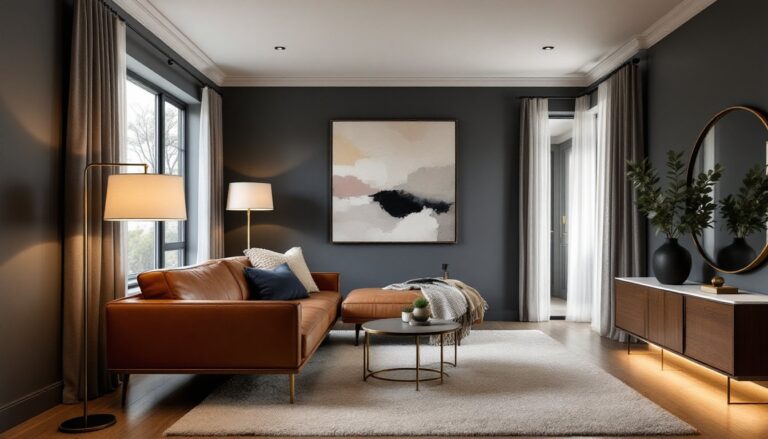
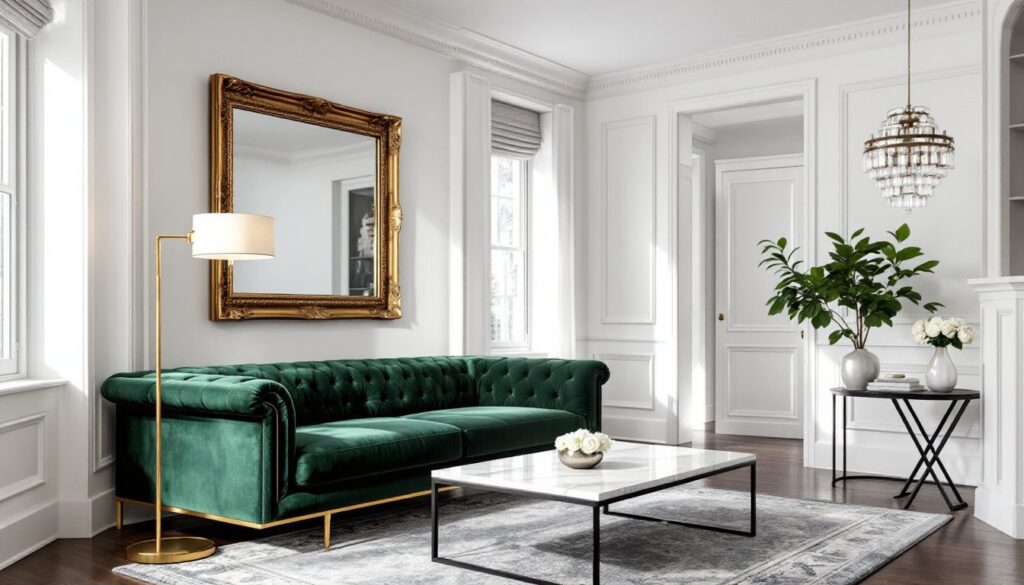
Living room: Start with a statement sofa, deep-button tufting, rolled arms, and legs in a dark wood or brass finish. Add a large ornate mirror above the sofa or on an adjacent wall. Keep the coffee table sleek: glass, marble, or lacquered wood. Layer in metallic accents with table lamps, picture frames, or a vintage brass bar cart. Use one bold rug with a traditional motif, but keep the pile low so it doesn’t compete with the furniture.
Bedroom: The bed is the anchor. A carved wooden headboard or an upholstered wingback headboard in velvet sets the tone. Flank it with matching nightstands in dark wood or mirrored finishes. Swap out builder-grade light fixtures for a small chandelier or a pair of crystal sconces. Bedding should be layered: a duvet in a solid color, a quilted coverlet, and a mix of pillows in silk, velvet, or embroidered linen. Avoid overly busy patterns, solid textures read more sophisticated.
Dining room: Dining rooms are where baroque shines. A long wood table with turned legs, paired with upholstered chairs (even just at the heads of the table), creates instant formality. Hang a chandelier centered over the table, about 30–36 inches above the surface for an 8-foot ceiling. If your ceiling is higher, add 3 inches for every additional foot of height. Paint the room a rich color, navy, emerald, or charcoal, and add wainscoting or picture-rail molding if the room lacks architectural detail. Installing wainscoting typically involves cutting MDF or pine boards to height, attaching them to wall studs with a nail gun, and topping with a chair rail. It’s a weekend project that makes a huge impact.
Bathroom: Smaller spaces can handle more drama. A freestanding clawfoot tub, a marble vanity top, or a vintage-style faucet in oil-rubbed bronze or polished brass brings baroque energy. Swap out a standard mirror for one with an ornate frame. Use hexagonal or marble-look tile on the floor, and consider a small chandelier (rated for damp locations per NEC Article 410) if ceiling height allows. Keep the palette tight, white, black, gold, so the details don’t overwhelm.
Color Palettes That Capture Modern Baroque Elegance
Color grounds the whole look. Modern baroque leans into rich, saturated hues and high-contrast pairings.
Jewel tones are the backbone: emerald green, sapphire blue, ruby red, amethyst purple. These colors have depth and a slight sheen when paired with the right finish. Use them on accent walls, upholstery, or drapery. A gallon of interior paint covers about 350–400 square feet, so one gallon is usually enough for an accent wall in a standard bedroom.
Metallics aren’t just accents, they’re part of the palette. Gold, brass, bronze, and silver appear in hardware, frames, light fixtures, and furniture legs. Mixing metals is acceptable here: just keep finishes consistent within a single piece (don’t mix brass and chrome on the same lamp).
Neutrals provide the counterbalance. Crisp white, soft cream, charcoal gray, and black keep the room from feeling like a jewelry box. Many designers working in baroque revival interiors pair one jewel tone with two neutrals to maintain visual hierarchy. For example: emerald velvet sofa, white walls, black accent tables, and brass lighting.
Don’t shy away from black. A black accent wall, black window trim, or matte black fixtures can make metallic and jewel tones pop. Use a satin or eggshell finish for easier cleaning, especially in high-traffic areas.
Furniture and Decor Essentials for the Modern Baroque Look
Executing modern baroque comes down to choosing the right pieces and knowing when to stop.
Furniture must have presence. Look for carved wood details, curved legs, tufted upholstery, and rich finishes. Avoid flat-pack furniture with laminate surfaces, it won’t hold up visually. Vintage and secondhand stores are goldmines for baroque-inspired chairs, mirrors, and consoles. A coat of paint or new upholstery can bring an old piece back to life. If you’re reupholstering a chair, budget $200–$500 for labor and fabric, or DIY it with a staple gun, upholstery foam, and patience.
Lighting is non-negotiable. Chandeliers are the most iconic baroque fixture, but they need proper support. A standard ceiling box is rated for fixtures up to 50 pounds. Heavier chandeliers require a fan-rated box or additional bracing between ceiling joists. If you’re unsure, hire an electrician or at least verify the box type before hanging anything over your dining table. Sconces, table lamps with crystal or metal bases, and floor lamps with sculptural details all work.
Mirrors and artwork add the final layer. Ornate mirrors in gold, silver, or distressed finishes reflect light and create the illusion of space. Hang them at eye level (around 57–60 inches to center) or above furniture as a focal point. For artwork, go big: one large canvas or a gallery wall with gilded frames. Classical subjects, portraits, still lifes, architectural prints, fit the aesthetic, but contemporary art in the right frame works too.
Textiles tie it together. Heavy curtains in velvet or silk, fringed or tasseled, frame windows and add softness. Hang them high and wide, mount the rod close to the ceiling and extend it several inches beyond the window frame on each side to make the window look larger. Rugs should anchor furniture groupings: aim for at least the front legs of sofas and chairs to sit on the rug.
Those exploring new home interior design often find that mixing baroque elements with contemporary layouts creates a unique character that feels both timeless and personal. Meanwhile, homeowners refreshing existing spaces can draw from broader interior home design ideas to see how baroque pairs with other styles.
Finally, don’t forget hardware. Cabinet pulls, door handles, curtain rods, and even light switch plates can reinforce the look. Swapping out builder-grade hardware for brass or bronze versions is a small upgrade with outsized impact. Most hardware installs with a screwdriver and takes minutes per piece.
Modern baroque interior design isn’t about recreating Versailles, it’s about borrowing its confidence, craftsmanship, and sense of occasion, then making it work in a real home. Start with one room, one statement piece, and build from there. The style rewards deliberate choices and a willingness to mix the grand with the everyday.