Table of Contents
ToggleGetting the lighting right in your home isn’t just about screwing in a few bulbs and calling it done. Proper lighting design uses multiple fixture types, each serving a specific function, ambient, task, and accent, layered together to create spaces that work as hard as they look good. Whether you’re tackling a kitchen remodel or just trying to figure out why your living room feels flat even though fresh paint, understanding these three categories and how they interact will transform how you approach every room in your house.
Key Takeaways
- Three types of lighting in interior design—ambient, task, and accent—work together in layers to create functional and visually appealing spaces.
- Ambient lighting provides the foundation with ceiling fixtures and recessed cans, while task lighting focuses on specific work areas like kitchens and desks to prevent eyestrain and shadows.
- Accent lighting adds drama and depth by highlighting architectural features and artwork; use track lights or wall sconces positioned 12–18 inches from walls for the best effect.
- Layering all three lighting types on separate switches or dimmers lets you adjust each independently, transforming rooms to suit different activities and times of day.
- Room-specific strategies matter: kitchens need strong task lighting with undercabinet LEDs, bedrooms benefit from soft overhead ambient with bedside reading lamps, and bathrooms require vertical task lighting flanking mirrors.
- Consistent color temperature (aim for 2700K warm white across most layers) and dimmer switches are non-negotiable for creating cohesive interior design that feels intentional rather than institutional.
What Are the Three Main Types of Lighting?
Interior lighting breaks down into three functional categories: ambient, task, and accent. Think of them as layers that build on each other, not isolated choices.
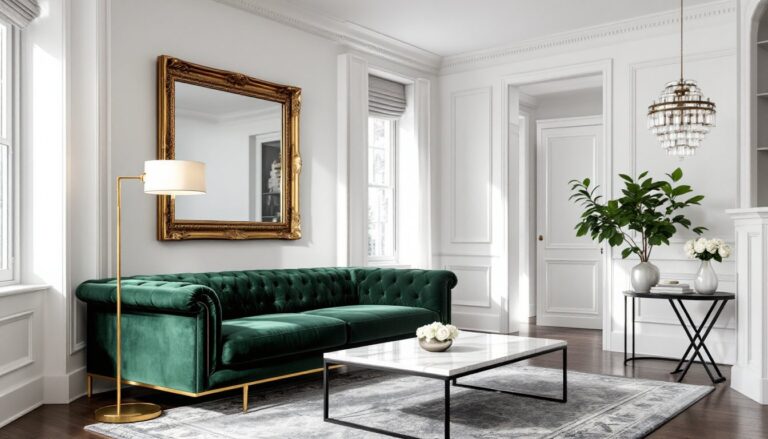
Ambient lighting provides overall illumination, the baseline light level that lets you navigate a room safely. Ceiling fixtures, recessed cans, and chandeliers typically handle this job. It’s non-directional and diffuse.
Task lighting focuses on specific work areas: countertops, desks, reading nooks, or vanities. Undercabinet strips, pendant lights over islands, and adjustable desk lamps all fall here. The goal is adequate brightness for activities without glare or shadows.
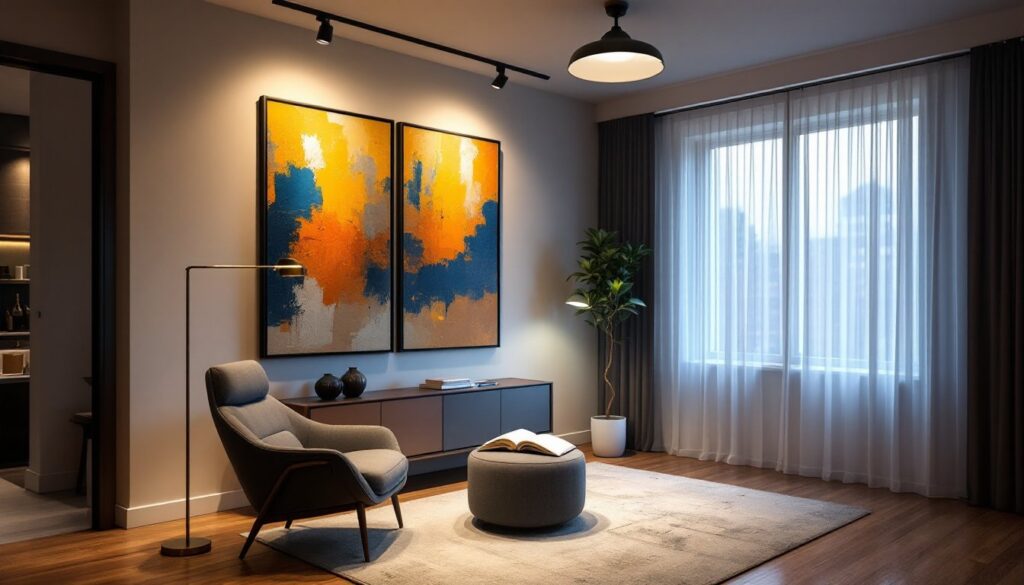
Accent lighting adds drama and highlights architectural features, artwork, or design elements. Track lights, wall sconces, and picture lights create visual interest and depth. This layer is optional but transforms a functional space into a designed one.
Most rooms need at least two of these three types to feel complete. A bedroom with only overhead ambient lighting feels flat and institutional. Add task lighting at bedside tables and accent lighting to highlight a feature wall, and suddenly you’ve got dimension and usability.
Ambient Lighting: Creating the Foundation
Ambient lighting is your workhorse, it sets the baseline visibility for the entire room. Without it, you’re stumbling around in the dark. With too much of it and nothing else, your space feels like a dentist’s office.
Common ambient fixtures include flush-mount ceiling lights, semi-flush fixtures, recessed downlights (typically 4-inch or 6-inch housings), and chandeliers. For recessed cans, plan on one fixture per 25-30 square feet of space, spaced roughly 4-6 feet apart depending on ceiling height and beam angle. An 8-foot ceiling can get away with tighter spacing than a 10-foot vault.
Dimmer switches are non-negotiable for ambient lighting. They let you adjust light levels for time of day and mood, bright for cleaning, lower for movie night. Install a standard rotary or slide dimmer (around $15-30) or go with a smart dimmer if you’re integrating home automation.
For larger spaces, consider multiple ambient sources on separate switches or circuits. A great room might use recessed perimeter lighting plus a central chandelier, giving you flexibility instead of one blinding overhead blast.
One caution: don’t rely solely on recessed cans in living spaces. They create a commercial vibe and can cast unflattering shadows on faces. Mix in pendants, chandeliers, or semi-flush fixtures with decorative elements to add warmth. Many design-focused homeowners layer ambient sources to avoid the harsh, one-note look that single-source lighting produces.
Task Lighting: Focused Illumination for Everyday Activities
Task lighting is about function, delivering adequate brightness exactly where you need it without spilling glare everywhere else. Poor task lighting leads to eyestrain, botched cuts, and frustrated cooks hunched over dim counters.
Kitchens demand solid task lighting. Undercabinet LED strips (hardwired or plug-in) eliminate shadows on countertops where you’re chopping and prepping. Look for fixtures that deliver 300-500 lumens per linear foot for adequate work light. Pendant lights over islands should hang 30-36 inches above the surface, high enough to avoid head-bumping, low enough to light the workspace effectively.
Home offices and workshops need adjustable desk lamps or swing-arm fixtures. LED task lamps with color temperature controls (2700K-5000K) let you dial in warm light for evening work or cooler daylight tones for detail tasks. For a shop bench, consider fluorescent or LED shop lights rated at 4000-5000 lumens for a 4-foot fixture.
Bathrooms benefit from vertical task lighting flanking mirrors rather than a single overhead fixture. Sconces mounted at 60-65 inches above the floor (roughly eye level) eliminate shadows under the eyes and chin, critical for shaving or makeup application. According to House Beautiful, this approach mimics professional vanity lighting and dramatically improves grooming tasks.
Reading nooks call for adjustable floor lamps or swing-arm wall sconces positioned to shine over your shoulder onto the page. A 60-75 watt equivalent LED bulb (800-1100 lumens) provides comfortable reading light without glare.
If you’re hardwiring task lighting, remember that kitchen and bathroom circuits often require GFCI protection per NEC code. Check local requirements before running new wiring, and consider hiring a licensed electrician if you’re not comfortable working in breaker panels.
Accent Lighting: Adding Drama and Visual Interest
Accent lighting is where lighting design gets fun. This layer highlights what matters, architectural details, artwork, textured walls, or statement furniture, and creates depth that flat ambient lighting can’t deliver.
Track lighting and directional recessed fixtures (often called “eyeball” or “gimbal” trims) let you aim light precisely. Use them to graze textured stone or brick, creating dramatic shadows that emphasize surface relief. Position fixtures 12-18 inches from the wall and angle them down at roughly 30 degrees for the best effect.
Picture lights (small fixtures mounted above frames) work for formal artwork, but many designers now prefer recessed adjustable fixtures in the ceiling aimed at the art. This avoids the wire clutter and provides more even illumination. Aim for 3:1 contrast, the artwork should be about three times brighter than surrounding ambient light to draw the eye without looking spotlit.
Wall sconces serve double duty as both ambient fill and accent pieces. Install them to flank a fireplace, frame a bed, or highlight a hallway gallery wall. Mount sconces 60-66 inches above the floor in most applications, higher if ceilings are tall.
LED strip lights tucked under floating shelves, behind headboards, or along toe kicks add subtle glow that makes architectural elements pop. Use warm white (2700K-3000K) for residential spaces unless you’re going for a modern, gallery-like vibe.
For woodland-inspired spaces, accent lighting can highlight natural textures like exposed beams or stone hearths. Dimming accent layers independently from ambient and task lighting gives you maximum control over mood and visual hierarchy.
One tip: accent lighting should be subtle. If someone walks in and immediately notices your accent fixtures rather than the features they’re highlighting, you’ve overdone it. The light itself should fade into the background while the illuminated object takes center stage.
How to Layer Lighting for Maximum Impact
Layering lighting means combining all three types, ambient, task, and accent, on separate controls so you can adjust each layer independently. Done right, it transforms a static room into a flexible space that adapts to different activities and times of day.
Start by mapping out your room’s functions. A living room might need:
- Ambient: Recessed perimeter lighting or a central chandelier
- Task: Reading lamps by seating areas
- Accent: Track lights highlighting artwork, uplights on plants, or LED strips behind media consoles
Put each layer on its own switch or dimmer. Smart switches and systems like Lutron Caseta or Leviton Decora Smart let you create scenes, “Movie Night” dims ambient and accent while keeping task lighting off, while “Cleaning Mode” cranks everything to 100%.
For kitchens, layer like this:
- Ambient: Recessed ceiling fixtures or flush-mount central light
- Task: Undercabinet strips, pendants over island or peninsula
- Accent: In-cabinet lighting for glass-front cabinets, toe-kick LEDs, or decorative pendants that double as visual focal points
Bedrooms benefit from layering too. Overhead ambient lighting for general use, bedside task lamps for reading, and accent lighting (sconces or LED strips) to highlight architectural features or create a soft glow for winding down.
Color temperature matters when layering. Stick with consistent warmth across layers, mixing 2700K warm white ambient with 5000K daylight task lighting creates a disjointed, uncomfortable feel. If you want flexibility, choose tunable LED fixtures that let you adjust color temperature on the fly.
Many smart home systems integrate lighting controls with voice assistants and automation routines, letting you set schedules or trigger lighting changes based on occupancy sensors. If you’re already running low-voltage wiring for other systems, consider adding lighting control infrastructure while walls are open.
Choosing the Right Lighting for Each Room
Different rooms demand different lighting strategies. Here’s a quick rundown:
Kitchen
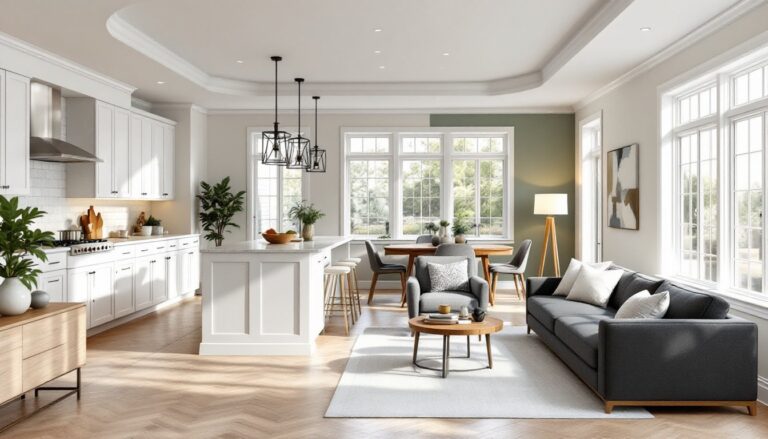
Prioritize task lighting, you’re working with sharp tools and hot surfaces. Undercabinet LEDs are essential. Add pendant lights over islands (30-36 inches above the counter) and use recessed cans or a flush-mount for ambient fill. Aim for 50-75 foot-candles at work surfaces.
Living Room
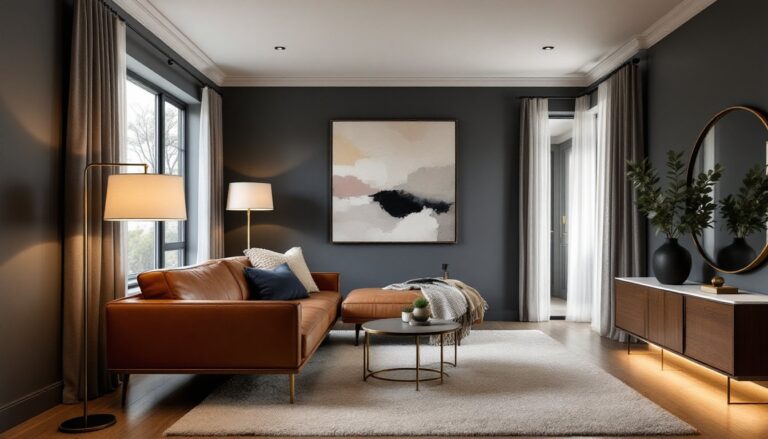
Layer heavily. Recessed ambient lighting on dimmers, table and floor lamps for task (reading, hobbies), and accent lighting to highlight art or architecture. Avoid a single central overhead fixture, it flattens the space. Interior design trends increasingly favor distributed lighting sources that create pools of light rather than uniform brightness.
Bedroom
Soft ambient overhead (chandelier or semi-flush on a dimmer), bedside task lamps, and optional accent lighting like wall sconces or LED strips behind the headboard. Keep controls accessible from bed, nobody wants to cross the room to turn off lights before sleep.
Bathroom
Vertical task lighting flanking mirrors is critical. Add overhead ambient lighting (recessed or a ceiling fixture) for general use. Shower and tub areas require wet-rated fixtures per NEC standards. A separate night-light or low-level accent lighting helps with middle-of-the-night navigation without blinding yourself.
Home Office
Adjustable task lighting at the desk, ambient overhead for general visibility, and accent lighting if you’ve got shelving or art. Avoid glare on monitors, position task lights to the side rather than directly behind the screen.
Hallways and Stairs
Safety first. Ambient lighting should eliminate shadows and dark spots. Wall sconces every 8-10 feet work well in hallways. Stairways require lighting at top and bottom with three-way switches, and many codes now require illumination at each step change in level. When planning interior design software renderings, accurate lighting simulation helps visualize how different fixture placements will perform before you start drilling holes.
Dining Room
A chandelier or pendant centered over the table provides both ambient and task lighting. Hang the bottom of the fixture 30-34 inches above the tabletop for an 8-foot ceiling. Add a dimmer, bright for family dinners, low for entertaining. Accent lighting (sconces, recessed) can highlight a sideboard or artwork.
Conclusion
Lighting isn’t an afterthought, it’s infrastructure that determines how every room functions and feels. By layering ambient, task, and accent lighting on separate controls, you build flexibility into your spaces that single-fixture solutions can’t touch. Start with function, add dimming capability to everything, and remember that the best lighting design is the kind you can adjust for any situation.