
Table of Contents
ToggleJames Farmer’s approach to interior design doesn’t scream for attention, it quietly commands it. Rooted in Southern tradition but never stuck in the past, his work blends organic materials, refined antiques, and a reverence for craftsmanship that DIYers and homeowners can learn from. Whether you’re renovating a single room or reconsidering your entire home’s aesthetic, Farmer’s principles offer a roadmap that’s more about restraint and authenticity than trend-chasing. This guide breaks down what makes his design philosophy work and how to bring those same elements into your own spaces without a designer’s budget.
Key Takeaways
- James Farmer interior design emphasizes restraint, natural materials, and collected elegance over trend-chasing, with spaces that evolve rather than being completed all at once.
- Incorporate substantial natural elements like oversized floral arrangements, reclaimed wood, and textured materials such as raw linen and plaster to anchor rooms with authenticity and character.
- Prioritize architectural improvements—solid doors, quality baseboards, and proper lighting placement—over decorative clutter to create homes with better bones and lasting impact.
- Layer textures and mix vintage antiques with contemporary pieces intentionally, avoiding matching sets and instead choosing items that share proportions or warm tones for visual cohesion.
- Edit ruthlessly by removing items that don’t serve a function or bring genuine pleasure, as Farmer’s rooms breathe because they aren’t overstuffed with filler pieces.
- Test paint colors in actual lighting conditions across multiple walls and walls throughout the day, then commit to soft neutrals and complex, layered tones rather than builder beige for sophisticated color palettes.
Who Is James Farmer and What Makes His Design Approach Unique?
James Farmer is a Georgia-based interior designer, author, and horticulturist whose work centers on livable elegance. Unlike designers who prioritize high-gloss finishes and showroom perfection, Farmer champions spaces that feel collected over time, rooms where a worn farm table sits comfortably next to a crystal chandelier.
His background in horticulture heavily informs his interiors. He doesn’t just add houseplants as afterthoughts: he designs around seasonal cuttings, garden-fresh arrangements, and architectural greenery that anchors a room. This isn’t decorating, it’s environmental design that respects how people actually live.
Farmer’s work has been featured in publications showcasing his refined Georgia residence, where every room demonstrates his commitment to layered, unhurried design. His philosophy rejects the idea that interiors need to be “done” in one go. Instead, he treats homes as evolving spaces that grow with their inhabitants.
What sets him apart is his ability to balance formality with function. He’ll mix a mid-century modern chair with Georgian architecture and make it feel inevitable. For DIYers, that’s a critical lesson: your home doesn’t need to adhere to a single style period. It just needs a clear sense of proportion and an honest respect for materials.
Signature Elements of James Farmer’s Interior Design Style
Farmer’s interiors share a few unmistakable traits. Understanding these signature moves gives you a toolkit for translating his aesthetic into your own projects.
Bringing Natural Elements Indoors
Farmer doesn’t rely on faux greenery or single potted succulents. He brings the garden inside through substantial arrangements, think armloads of hydrangeas, magnolia branches that scrape the ceiling, or bare twigs in winter. These aren’t delicate accents: they’re structural elements that command space.
For homeowners, this means rethinking how you use florals and foliage. Skip the grocery store bouquet in a glass vase. Instead, source local greenery, even trimmings from your yard, and use oversized vessels: stone urns, galvanized buckets, or vintage crocks. The container matters as much as the stems.
Natural materials extend to architectural choices. Farmer favors reclaimed wood beams, stone floors, and plaster walls over drywall. If you’re renovating, consider leaving ceiling joists exposed (check with a structural engineer first if they’re load-bearing) or swapping vinyl flooring for wide-plank oak or reclaimed pine. Actual lumber dimensions matter here, 1×6 nominal boards (which measure 3/4″ x 5.5″ actual) create a different visual rhythm than 1x8s (3/4″ x 7.25″). Choose based on room scale.
He also incorporates raw linen, jute, and sisal textiles. These aren’t high-maintenance fabrics, but they do require proper installation. When upholstering with linen, use a heavy-duty staple gun (not a craft stapler) and pre-wash the fabric to account for shrinkage. Linen can lose 3-5% of its dimension after the first wash.
Layered Textures and Vintage Finds
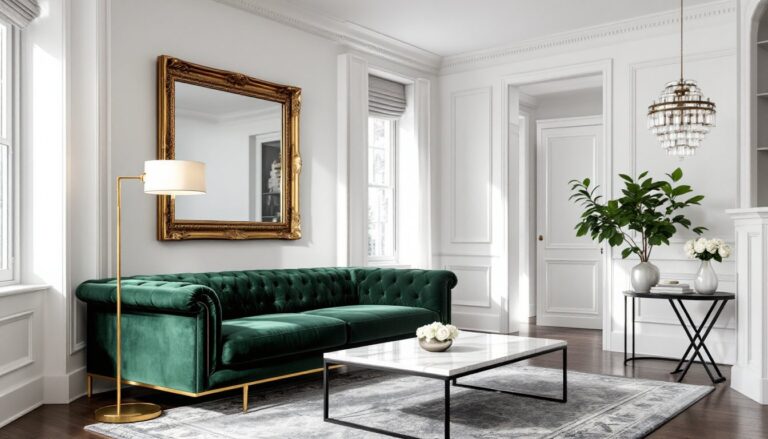
Farmer’s rooms feel curated because they are, but not in a precious way. He layers textures deliberately: a nubby wool throw over a velvet settee, a rough-hewn table atop a Persian rug, matte plaster walls reflecting light from a polished brass sconce.
For DIY implementation, start with wall finishes. Drywall mud can be troweled in thin, irregular coats to mimic European plaster. Apply a base coat, let it dry 24 hours, then add a second coat with a 14-inch taping knife held at a 30-degree angle. Seal with a matte or eggshell paint, coverage is typically 350-400 square feet per gallon for quality paint, but textured surfaces may require 20% more.
Vintage and antique pieces anchor Farmer’s interiors. He doesn’t buy matching bedroom sets: he mixes a Federal-period chest with a French linen-press and makes them converse through shared wood tones or similar proportions. Hunt estate sales, architectural salvage yards, and online marketplaces, but inspect structural integrity. Check drawer joints for dovetail construction (a sign of quality), and test furniture stability, wobbly legs often mean loose mortise-and-tenon joints that need re-gluing with wood glue (PVA) and clamping for 24 hours.
Metal finishes get the same layered treatment. Farmer mixes unlacquered brass (which patinas over time), oil-rubbed bronze, and aged pewter in a single room. For hardware upgrades, don’t default to matching every knob and hinge. Vary finishes across cabinetry and doors, but keep them within the same warmth or coolness (all warm metals or all cool metals) for visual coherence.
How to Incorporate James Farmer’s Design Principles in Your Own Home
Translating Farmer’s aesthetic into a DIY project requires restraint and a willingness to edit. Start by assessing what you already own. His style isn’t about buying everything new, it’s about seeing potential in what’s there.
Edit ruthlessly. Remove anything that feels like filler. If a piece doesn’t serve a function or bring you genuine pleasure, it’s visual clutter. Farmer’s rooms breathe because they aren’t overstuffed.
Prioritize architectural improvements over décor. Instead of buying more throw pillows, invest in better bones. That might mean:
- Replacing hollow-core interior doors with solid wood or five-panel doors (standard interior door dimensions are 80″ x 30-36″ wide, but measure your existing jambs before ordering).
- Swapping builder-grade baseboards for taller, more substantial trim, consider 1×6 or 1×8 pine baseboards with a simple profile. Install with a finish nailer using 2-inch 16-gauge nails, placing fasteners every 16 inches into wall studs.
- Painting trim and doors in a satin or semi-gloss finish for subtle contrast against matte walls. Use a quality trim paint: cheaper paints yellow over time, especially in low-light areas.
Introduce natural elements strategically. Don’t scatter small plants everywhere. Choose one or two statement spots, a large arrangement on a dining table, a potted fig tree in a corner, and commit. For those interested in exploring broader design career paths, understanding how professionals curate these elements can be invaluable.
Rethink your color palette. Farmer gravitates toward soft neutrals, warm whites, pale grays, muted greens, and earthy terracottas. These aren’t builder beige: they’re complex, layered tones. Test paint samples in your actual lighting conditions. Paint a 2′ x 2′ section on at least two walls (one with natural light, one without) and observe how the color shifts throughout the day.
Mix old and new with intention. Pair a vintage piece with something contemporary. A reclaimed wood console under a modern mirror, or an antique farm table surrounded by mid-century chairs. The contrast keeps spaces from feeling like museum recreations.
Invest in fewer, better textiles. One high-quality linen duvet cover beats five polyester throw pillows. Look for natural fiber content, 100% linen, wool, cotton, or blends that are at least 80% natural. These materials age better and feel better.
Don’t forget lighting. Farmer uses a mix of ambient, task, and accent lighting, often with dimmers to control mood. If you’re installing new fixtures, consider where they’re wired. A beautiful pendant does nothing if it’s centered in an empty room rather than over a table. Relocating electrical boxes requires cutting into drywall and possibly hiring a licensed electrician, but it’s worth it for proper lighting placement. Always follow NEC (National Electrical Code) guidelines and check local permit requirements.
James Farmer’s Influence on Modern Southern Interior Design
Farmer helped shift Southern interior design away from heavy, dark-wood formality and toward something lighter and more livable. His influence shows up in the current wave of Southern homes that embrace painted brick, whitewashed wood, and airy, high-ceilinged spaces filled with natural light.
His work demonstrates that Southern design traditions can coexist with modern living without pastiche. He doesn’t recreate plantation houses: he reinterprets their best qualities, proportion, craftsmanship, and connection to landscape, for contemporary life.
This approach resonates with DIYers because it’s accessible. You don’t need a historic home to apply Farmer’s principles. A suburban ranch or a city condo can incorporate these ideas through material choices, restrained color palettes, and a commitment to quality over quantity.
His influence also extends to how homeowners think about sustainability. By valuing antiques, reclaimed materials, and durable natural fibers, Farmer’s aesthetic inherently reduces waste. It’s a slower, more thoughtful approach to design that aligns with current interest in sustainable home practices and long-term value.
For professionals and hobbyists alike, Farmer’s body of work serves as a case study in developing a signature style that’s rooted in place but not bound by it. His interiors feel Southern without relying on clichés, no mason jars, no “gather” signs, no forced rusticity. Just honest materials, thoughtful composition, and rooms that look like they’ve been lived in and loved.
Conclusion
James Farmer’s interior design philosophy offers a clear path for homeowners tired of chasing trends. His work proves that restraint, quality materials, and respect for architectural integrity create spaces that improve with age. Start with one room, edit ruthlessly, invest in better bones over more stuff, and let your home evolve. The most successful interiors aren’t installed, they’re built, layer by layer, over time.