Table of Contents
ToggleDesert modern interior design fuses the clean lines of mid-century modernism with the raw textures and warm palettes of the American Southwest. It’s not about cacti-shaped salt shakers or cowboy kitsch, it’s a sophisticated style that celebrates natural materials, open floor plans, and the stark beauty of desert landscapes. This approach works especially well in homes with abundant natural light and where indoor-outdoor living matters. Whether you’re renovating a ranch house or simply want to bring desert warmth to your living room, this guide walks through the fundamentals.
Key Takeaways
- Desert modern interior design fuses mid-century modernism with Southwest aesthetics, emphasizing natural materials, open floor plans, and earthy tones rather than cowboy kitsch.
- Prioritize organic materials like reclaimed wood, stone, concrete, adobe, and brushed metals while layering textures to prevent spaces from feeling sterile.
- Limit your color palette to 3–4 earthy, muted tones (terracotta, sage, warm whites, charcoal) that mirror the desert landscape and test paint samples under different lighting conditions.
- Create open sight lines by removing non-load-bearing walls, maximize natural light with oversized windows, and use sheer curtains or wood blinds instead of heavy drapes.
- Choose low-profile furniture with clean geometric lines, natural-fiber rugs, and minimal decor—prioritizing quality handcrafted pieces like pottery and woven baskets over visual clutter.
- Desert modern style rewards thoughtful curation and patience; focus on materials that age gracefully and build your space gradually over time rather than trying to recreate a showroom.
What Is Desert Modern Interior Design?
Desert modern is an architectural and interior design movement rooted in the mid-20th century modernist homes built across Palm Springs, Scottsdale, and other arid regions. Think flat or low-pitched roofs, expansive windows, and post-and-beam construction that blurs boundaries between indoors and out.
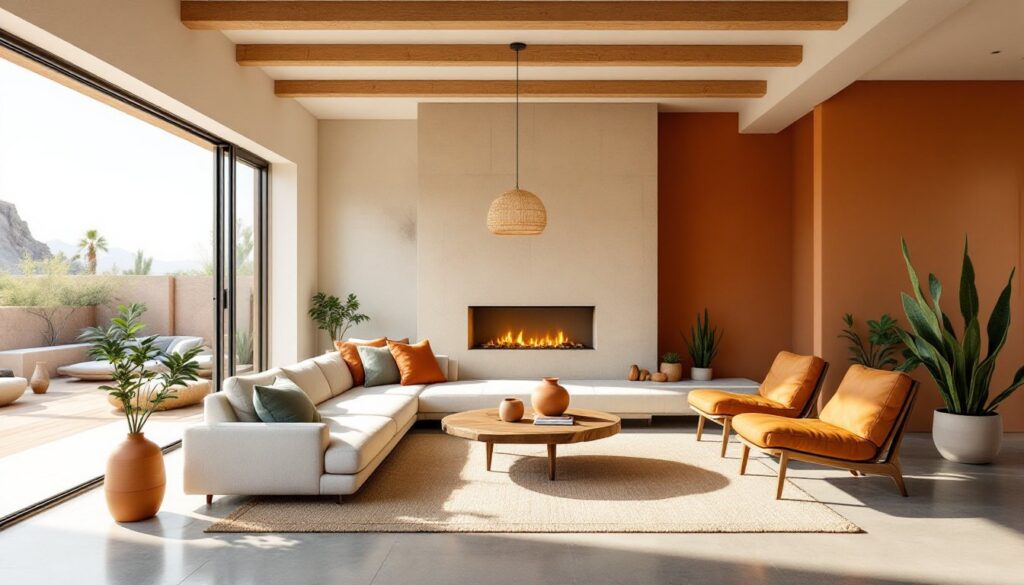
In terms of interiors, desert modern emphasizes organic materials, stone, wood, clay, leather, over synthetic finishes. Spaces feel airy and uncluttered, with minimal ornamentation. Color schemes draw directly from the environment: terracotta, sand, sage, rust, and warm grays. Furniture tends toward clean, geometric silhouettes inspired by mid-century design, but softened with woven textiles and handcrafted pieces.
Unlike Southwestern or Santa Fe style (which leans heavily on carved wood, colorful Saltillo tile, and folk art), desert modern keeps things restrained. It’s more about subtle texture and considered details than visual clutter. The result is a space that feels grounded, calm, and connected to the landscape, even if you’re nowhere near the Sonoran Desert.
Key Elements of Desert Modern Style
Natural Materials and Earthy Textures
Desert modern leans heavily on raw, tactile materials that age gracefully. Common choices include:
- Wood: Light-toned species like white oak, ash, or maple for flooring and cabinetry. Reclaimed or weathered wood adds character without feeling rustic.
- Stone and concrete: Polished concrete floors (sealed properly to prevent dusting) work well in kitchens and entryways. Stacked stone accent walls or fireplace surrounds in sandstone or limestone bring warmth.
- Adobe and plaster: Authentic adobe brick (sun-dried clay and straw) or smooth plaster walls add thermal mass and a handmade quality. If you’re working with standard drywall, a textured lime wash or earthen plaster can mimic the look.
- Metals: Brushed brass, oil-rubbed bronze, and blackened steel for fixtures and hardware. Avoid shiny chrome, it reads too industrial.
Layering textures is key. Pair a smooth concrete floor with a jute rug, linen upholstery, and a chunky knit throw. The interplay of rough and refined keeps spaces from feeling sterile. When selecting design and decor elements, prioritize materials that look better with wear.
Warm, Neutral Color Palettes
Desert modern color schemes mirror the landscape at different times of day, sunrise pinks, midday creams, sunset oranges, and twilight purples. Start with a neutral base: warm whites (not stark white), beige, taupe, or greige for walls and large furniture pieces.
Accent colors should feel earthy and muted:
- Terracotta and rust: Perfect for throw pillows, pottery, or a feature wall.
- Sage and olive: Bring in soft greens through plants or textiles.
- Ochre and mustard: Use sparingly in artwork or small decor items.
- Charcoal and deep brown: Ground the palette with darker wood tones or a charcoal sectional.
Paint coverage typically runs 350–400 square feet per gallon for quality interior paint (one coat). For a cohesive look, limit your palette to 3–4 colors throughout the main living areas. Test samples in different lighting before committing, desert light shifts dramatically throughout the day, and colors that look soft at noon can glow intensely at sunset.
How to Create a Desert Modern Living Space
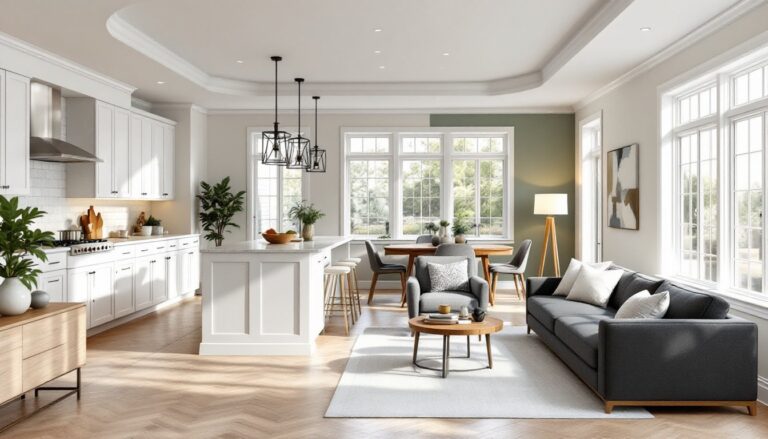
Start with the architecture. If you’re renovating, consider removing non-load-bearing walls to create open sight lines between living, dining, and kitchen areas. Consult a structural engineer or architect before touching any wall, load-bearing removal requires IRC-compliant beam installation and permits in most jurisdictions.
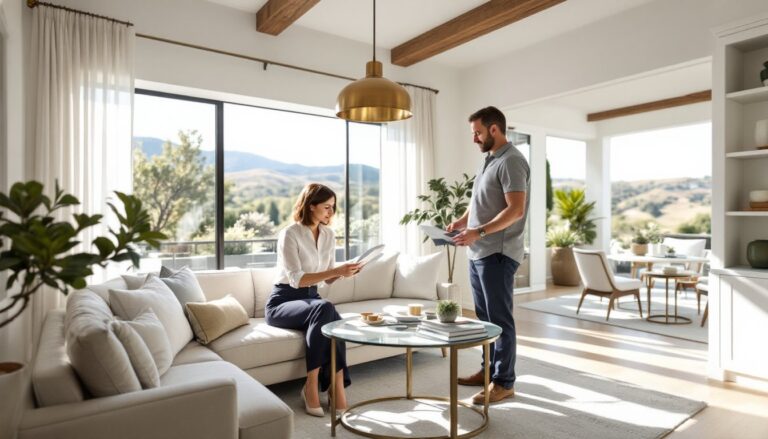
Windows and natural light are critical. Oversized windows (floor-to-ceiling if possible) connect interiors to outdoor views. If privacy is a concern, use sheer linen curtains or wood blinds instead of heavy drapes. South- and west-facing windows may need exterior shading, overhangs, pergolas, or retractable awnings, to prevent overheating and UV damage to furnishings.
For flooring, polished concrete is authentic and durable but requires professional installation (expect 3–5 days for pouring, finishing, and sealing a standard living room). Alternatives include wide-plank hardwood (nominal 1×6 or 1×8 boards, actual 3/4″ × 5.5″ or 7.25″) in light finishes, or luxury vinyl plank (LVP) that mimics wood or stone, easier to install and more forgiving on uneven subfloors.
Exposed structural elements add character. If you have wood beams or trusses in the ceiling, consider leaving them visible. Sand and seal with a matte or satin polyurethane to protect against dust. For drywall ceilings, add faux beams (lightweight polyurethane or hollow wood boxes) anchored into ceiling joists with lag screws, locate joists with a stud finder first.
Keep walls mostly bare or use large-scale art. Oversized abstract paintings, black-and-white desert photography, or woven wall hangings work well. Hang art at eye level (center of the piece around 57–60 inches from the floor). Use appropriate anchors: toggle bolts for drywall, masonry anchors for concrete or plaster.
Integrate interior design ideas that emphasize horizontal lines and low-profile furniture to enhance the sense of openness. If you’re considering major structural changes, regional home decor design trends often reflect local climate considerations worth studying.
Desert Modern Decor: Furniture and Accessories
Choose furniture with clean, geometric lines and low profiles. Mid-century modern pieces (or quality reproductions) fit naturally: think walnut credenzas, leather Eames-style lounge chairs, and simple teak side tables. Avoid ornate carvings or fussy details.
Seating: Opt for sofas and chairs in neutral linen, leather, or canvas. Leather develops a desirable patina over time. If buying upholstered pieces, check for kiln-dried hardwood frames, they won’t warp in dry climates. Cushion fill should be high-density foam (at least 1.8 lb density) for longevity.
Tables and storage: Live-edge wood tables (with natural bark edges) add organic character. Pair them with simpler pieces to avoid overload. For storage, use open shelving (nominal 2×10 or 2×12 pine or oak boards on metal brackets) to display handmade pottery, woven baskets, and a few well-chosen books. Keep surfaces mostly clear.
Textiles and rugs: Layer in warmth with natural-fiber textiles. Jute, sisal, or flatweave wool rugs anchor seating areas without competing for attention. Add throw pillows in linen or cotton with subtle patterns, geometric prints, stripes, or muted florals. Avoid synthetics: they don’t breathe well and can feel clammy in warm climates.
Lighting: Pendant lights with woven rattan, frosted glass globes, or simple metal cages suit the style. Use warm LED bulbs (2700K–3000K color temperature) to enhance the cozy, sunset-like glow. Dimmer switches (standard single-pole or 3-way, depending on your circuit) let you adjust ambiance, straightforward DIY install if you’re comfortable with basic electrical work, but hire a licensed electrician if you’re unsure.
Plants and greenery: Desert modern embraces low-water plants, succulents, agave, snake plants, and potted cacti. Larger specimens like fiddle-leaf figs or bird-of-paradise add height in corners. Use simple ceramic or terracotta planters. Ensure pots have drainage holes: most houseplants die from overwatering, not neglect. Inspiration from Scandinavian desert modern interiors shows how minimalist design principles complement natural plant displays.
Accessories: Keep decor minimal and intentional. Handmade pottery, woven baskets, a sculptural piece of driftwood, or a single statement vase. Quality over quantity. If you need ideas for balancing minimalism with warmth, exploring home decor design ideas can provide helpful strategies. Resources like Decoist often feature updated takes on regional design trends worth browsing.
Conclusion
Desert modern interior design isn’t about recreating a showroom, it’s about building a space that feels honest, comfortable, and connected to the natural world. Focus on quality materials, restrained color, and pieces that serve a purpose. The style rewards patience and thoughtful curation over quick fixes. Start with one room, get the bones right, and layer in texture and personality over time.