Table of Contents
ToggleNew England interior design isn’t about copying a catalog, it’s about capturing the quiet confidence of a region shaped by rocky coastlines, colonial history, and four distinct seasons. This style balances timeless architectural details with a lived-in comfort that feels genuine, not staged. Whether you’re working with a historic property or layering coastal charm into a modern build, understanding the core principles helps avoid the trap of nautical theme-park overload. The look is more about material honesty and restrained color than hanging anchors on every wall.
Key Takeaways
- New England interior design balances historic colonial details with lived-in comfort, prioritizing material honesty and restrained color palettes over trendy nautical themes.
- The style relies on natural materials like wide-plank pine flooring, plaster walls, and quality wood trim, with architectural elements like crown molding, wainscoting, and built-in shelving defining the authentic look.
- Whites, grays, soft blues, and earth tones drawn from the coastal landscape form the foundation of New England color schemes, while high-saturation colors and warm oranges should be avoided.
- Solid wood furniture with clean lines—including Windsor chairs, slipcovered sofas, and farmhouse tables—should be arranged for conversation and practicality rather than visual effect.
- New England interior design succeeds when rooms feel curated over time by layering pieces gradually, mixing antiques with new construction, and focusing on quality craftsmanship and restraint rather than completing the entire room at once.
What Defines New England Interior Design Style?
New England design draws from 17th- and 18th-century colonial architecture, blending English and Dutch influences with practical adaptations for harsh winters and coastal exposure. The style prioritizes durability, natural light, and honest materials, think wide-plank pine floors, exposed ceiling beams, and plaster walls over drywall when budgets allow.
The aesthetic leans traditional but not stuffy. Rooms feel curated over time rather than decorated all at once. Antiques mix with newer pieces, and furniture gets chosen for function first. A Windsor chair or ladder-back bench isn’t there to make a statement, it’s there because it works. This approach mirrors how interior home design ideas evolve naturally over years of living in a space.
Key characteristics include:
- Natural materials: Oak, maple, and pine for flooring and trim: wool, linen, and cotton for upholstery and window treatments
- Understated color: Whites, grays, blues, and earth tones dominate, with color drawn from the landscape rather than trend cycles
- Architectural detail: Crown molding, wainscoting, window seats, built-in shelving, and paneled doors
- Functional layout: Rooms flow logically, with furniture arranged for conversation and practicality, not Instagram angles
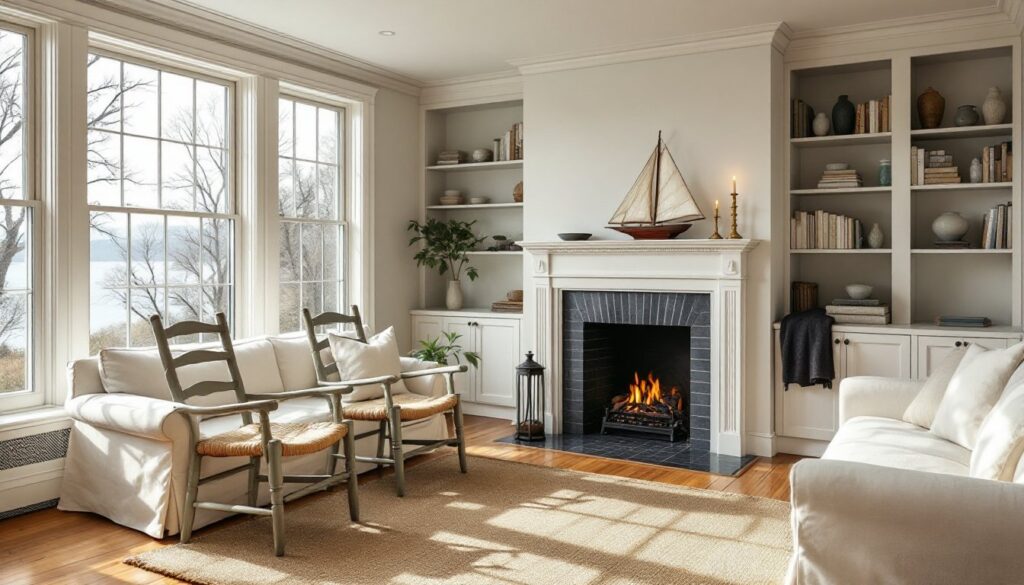
Coastal influence shows up through weathered textures and maritime references, but subtly. A model ship on a mantel works: a dozen throw pillows with screen-printed anchors doesn’t. The line between tasteful nod and tourist trap is thin, err on restraint.
If you’re tackling this in a newer home, focus on adding architectural character through trim work and material choices. Stock builder-grade casing won’t cut it. Upgrading to 5/4-inch solid wood trim (actual dimension closer to 1 inch thick) and painting it in a warm white or off-white immediately elevates the space. Swapping hollow-core doors for six-panel colonial-style doors makes a similar impact.
Essential Color Palettes for New England Interiors
New England palettes pull directly from the region’s natural environment: stormy grays, deep navy blues, crisp whites, sandy beiges, and mossy greens. These aren’t trendy, they’ve been on walls for two centuries because they work with the quality of coastal and northern light.
Whites and neutrals form the foundation. Benjamin Moore White Dove and Sherwin-Williams Alabaster are go-to choices for trim and walls, offering warmth without yellowing. True whites (like BM Chantilly Lace) can feel sterile in rooms with limited natural light, test samples on north-facing walls before committing. One gallon of quality primer and paint typically covers 350-400 square feet, but older plaster walls or dark colors underneath may require a second coat.
Blues range from soft powder to nearly black navy. Hale Navy (BM HC-154) works well in dining rooms and libraries, while lighter shades like Palladian Blue (BM HC-144) suit bedrooms and bathrooms. Pair blues with white or cream trim for contrast, don’t go tone-on-tone unless you’re aiming for a monotone, gallery-like effect.
Greens and earth tones bring in the landscape. Sage, olive, and muted moss tones add warmth without veering rustic or country. Use them as accents in upholstery, area rugs, or painted furniture rather than full-room applications. Resources like Dwell often feature modern takes on traditional palettes that balance heritage with contemporary sensibility.
Avoid high-saturation colors and warm oranges, they clash with the cool, diffused light typical of New England. If you want warmth, get it from wood tones and textiles, not wall color. Also, skip the all-gray trend that dominated the 2010s. Grays work as accents, but monochrome gray interiors feel cold and builder-basic, not classic.
For DIYers painting trim and walls, use a quality angled sash brush (2.5-inch) for cutting in and a 3/8-inch nap roller for walls. Low-VOC paints are standard now, but ensure proper ventilation, open windows and use a box fan even with low-odor formulas.
Key Furniture and Architectural Elements
Traditional Furniture Choices and Placement
New England interiors favor solid wood furniture with clean lines and minimal ornamentation. Think Shaker-inspired simplicity, not Victorian fuss. Common pieces include:
- Windsor chairs: Steam-bent spindles and saddle seats, functional for dining or as accent seating
- Slipcovered sofas: Linen or cotton slipcovers in white or natural tones, practical for homes with pets or kids
- Ladder-back chairs and benches: Often painted in muted tones or left natural
- Trestle or farmhouse tables: Oak or pine, sized for the room (a 72-inch table seats six comfortably: 96 inches seats eight)
- Brass or iron bed frames: Simple four-poster or sleigh beds, no heavy drapery
Upholstery leans toward natural fibers, linen, cotton duck, and wool. Leather works for accent chairs or library seating. Avoid overly plush or trendy sectionals: New England style doesn’t do lounger-style comfort. Furniture gets arranged to help conversation, often anchored by a fireplace or large window.
When sourcing pieces, mix antiques or vintage finds with new construction. An old sea chest as a coffee table or a refinished farmhouse table brings character that IKEA flat-pack can’t replicate. If buying new, look for furniture with mortise-and-tenon joinery rather than dowels or pocket screws, check under the table or flip a chair to inspect construction.
Architectural Details That Define the Look
Molding and trim are non-negotiable. New England homes traditionally feature:
- Crown molding: 3.5 to 5.5 inches in height, depending on ceiling height (8-foot ceilings get 3.5-inch: 10-foot ceilings can handle 5.5-inch)
- Baseboard: 5 to 7 inches tall, often with a simple cap molding
- Chair rail and wainscoting: Typically installed 32 to 36 inches from the floor: beadboard or flat-panel wainscoting both work
- Window and door casings: 3.5 to 5.5 inches wide, with corner blocks (plinth blocks at baseboards, rosettes at crown)
Installing trim requires a miter saw for clean 45-degree cuts, a finish nailer (18-gauge brad nailer works for most applications), and wood filler to hide nail holes before painting. If you’re adding wainscoting, ensure walls are plumb, older homes often aren’t. Use a 4-foot level and shim as needed.
Built-ins add both storage and character. Window seats with storage below, floor-to-ceiling bookcases, and mudroom cubbies are all period-appropriate. These projects require intermediate carpentry skills, if you’re not confident scribing trim to uneven walls or building face frames, hire a finish carpenter. A botched built-in stands out more than no built-in at all.
Flooring traditionally uses wide-plank wood, 5 to 12 inches wide, usually pine, oak, or maple. Reclaimed flooring adds instant age and character but check for lead paint if sourcing from pre-1978 demolition (EPA Lead-Safe rules apply). New wide-plank flooring runs $8 to $15 per square foot installed, depending on species and finish. Many homeowners exploring home decor and interior design start with refinishing existing floors before replacing them.
Fireplaces often serve as focal points. If you have a non-functional fireplace, consider converting it to gas logs or simply styling the hearth. Adding a wood mantel (6×6 beam or custom-milled surround) changes the room. Secure it properly, mantels need to be anchored into studs with 3-inch construction screws or lag bolts, not drywall anchors.
How to Incorporate New England Design in Every Room
Living rooms should feel gathered, not spread out. Arrange seating to face a fireplace or large window. A linen or cotton slipcover sofa anchors the space, flanked by a pair of wood-frame armchairs. Add a wool or jute area rug, 8×10 feet for most living rooms, and layer with a smaller accent rug if needed. Avoid wall-to-wall carpeting: it’s dated and hides original flooring.
For kitchens, the style leans toward painted cabinetry in white, cream, or soft gray with brass or oil-rubbed bronze hardware. Shaker-style cabinet doors (flat-panel, recessed center) are period-correct and timeless. Countertops in butcher block, soapstone, or white marble fit better than granite or engineered quartz. If renovating, consider open shelving for dish display, just be ready to keep it tidy. Design inspiration from Home Bunch often showcases updated takes on classic kitchen layouts.
Dining rooms benefit from a large wood table and mismatched seating, Windsor chairs at the sides, upholstered chairs at the heads. Hang a simple chandelier or lantern-style pendant centered over the table, 30 to 36 inches above the surface. If the room has wainscoting, paint it the same color as the trim and use a contrasting or complementary wall color above the chair rail.
Bedrooms keep it simple: a wood or iron bed frame, white or natural linen bedding, and minimal furniture. A single nightstand or small dresser suffices, don’t overcrowd. Add texture with a quilted coverlet or wool throw. Window treatments should be functional: linen or cotton curtains on simple rods, or wood blinds. Skip heavy drapes unless the room is exceptionally large or formal.
Bathrooms embrace classic fixtures: white subway tile (3×6 inches), pedestal or console sinks, and freestanding or clawfoot tubs where space allows. Use hex tile or basket-weave patterns for flooring. Fixtures in brushed nickel, chrome, or unlacquered brass (which patinas over time) suit the style. Avoid vessel sinks and frameless glass showers, they read contemporary, not traditional. When working with tile, a wet saw is essential for clean cuts, and proper waterproofing membrane (like Schluter or RedGard) prevents future moisture issues.
Mudrooms and entryways need built-in storage: hooks at adult and kid heights, bench seating with storage below, and cubbies for shoes and bags. Use beadboard or V-groove paneling on walls for durability and easy cleaning. A small boot tray and durable slate or tile flooring handle wet, muddy gear. If adding hooks, mount them into studs or use heavy-duty hollow-wall anchors rated for 50+ pounds, coats and bags add up fast.
Conclusion
New England interior design succeeds when it feels earned, not applied. Focus on quality materials, honest construction, and restraint in decoration. The style rewards patience, layering in pieces over time rather than forcing a complete room overnight. Whether you’re painting trim, installing wainscoting, or hunting for the right farmhouse table, each choice should reinforce the quiet, enduring character that defines the look.