Table of Contents
ToggleTraditional Mexican interior design doesn’t whisper, it sings. It’s bold, warm, and unapologetically colorful, rooted in centuries of indigenous craftsmanship and Spanish colonial influence. If you’ve ever walked through a historic hacienda or a sun-drenched courtyard in Oaxaca, you’ve seen how texture, color, and handcrafted details come together to create spaces that feel both lived-in and artful. This style isn’t about museum-perfect rooms. It’s about embracing imperfection, celebrating craft, and creating a home that feels alive. Whether you’re renovating a single room or reimagining your whole house, traditional Mexican design offers a toolkit of materials, colors, and techniques that work beautifully in modern homes.
Key Takeaways
- Traditional Mexican interior design combines indigenous Mesoamerican elements with Spanish colonial architecture, featuring bold colors, thick adobe walls, and handcrafted details that prioritize warmth over perfection.
- Authentic color palettes use saturated, pigment-heavy hues like terracotta, cobalt blue, and mustard yellow in matte finishes, with rooms shifting dramatically in color rather than matching across spaces.
- Key architectural materials include terracotta Saltillo tiles (requiring penetrating sealant every 1–2 years), exposed wooden vigas, wrought iron fixtures, and natural stone like cantera for authentic Mexican design impact.
- Furniture and décor emphasize handcrafted, solid wood pieces from pine or mesquite, paired with vibrant textiles like serapes and embroidered pillows, creating layered, intentionally organized spaces.
- You can incorporate traditional Mexican interior design gradually through paint, hardware swaps, low-commitment architectural details (like pre-fab niches), and sourced furniture without requiring full renovation.
- Talavera tiles, punched tin fixtures, carved wooden mirrors, and hand-woven textiles add personality and shadow play; embrace imperfection and hand-troweled finishes like lime wash to achieve authentic depth and texture.
What Defines Traditional Mexican Interior Design?
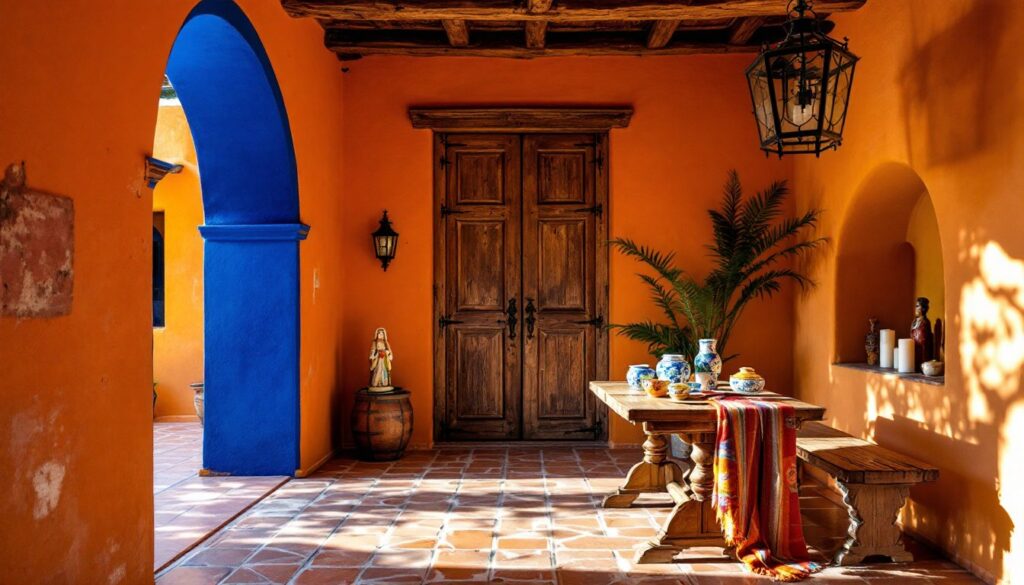
At its core, traditional Mexican design is a blend of indigenous Mesoamerican elements and Spanish colonial architecture. Think thick adobe walls, exposed wooden vigas (ceiling beams), and courtyards that blur the line between indoor and outdoor living. It’s functional design born from climate and available materials, keeping interiors cool in scorching heat while using local clay, stone, and timber.
Color is central. Walls are often painted in saturated hues: deep terracotta, cobalt blue, sunflower yellow, and rich reds. These aren’t accent walls, they’re full-room commitments. Furniture tends to be sturdy and rustic, often handcrafted from mesquite, pine, or reclaimed wood. Ornamentation is hand-applied, not mass-produced: carved doors, wrought iron fixtures, and ceramic tiles with intricate patterns.
Unlike minimalist trends, traditional Mexican interiors embrace layering. Textiles, pottery, religious iconography, and folk art share space without competing. It’s organized chaos with intention. If you’re drawn to home decor and interior design that feels personal and storied, this style rewards you for showing your hand.
Essential Color Palettes in Mexican Interiors
Mexican color palettes pull directly from the landscape: desert ochres, bougainvillea pinks, turquoise skies, and the burnt orange of clay pottery. These aren’t pastels or neutrals, they’re pigment-heavy, sun-baked colors that hold up under bright natural light.
Common wall colors include terracotta orange, mustard yellow, cobalt blue, and coral pink. These are often paired with white or cream trim to frame doorways and windows. You can also see deep greens and purples, especially in dining or living spaces. The key is contrast: a bright yellow wall against dark wood furniture, or a cobalt blue room with wrought iron and leather seating.
If you’re painting, use flat or matte finishes. Gloss reads too modern and doesn’t replicate the chalky, lime-washed look of traditional plaster. For authentic results, consider mineral-based paints or lime wash, which breathe better and age gracefully. Coverage is typically 350–400 square feet per gallon depending on porosity, so budget accordingly.
Don’t overthink coordination. In traditional Mexican homes, rooms can shift dramatically in color from one to the next. A sunny yellow kitchen can open into a cool blue hallway. It’s not about matching, it’s about creating distinct, memorable spaces.
Key Architectural Elements and Materials
If you’re doing more than a cosmetic refresh, understanding structural and architectural details will guide your material choices. Traditional Mexican homes often feature thick stucco or adobe walls (12–18 inches in some cases), which provide thermal mass and a sculptural quality you don’t get with standard 2×4 or 2×6 framing (actual dimensions: 1.5″ × 3.5″ and 1.5″ × 5.5″).
Exposed ceiling beams, or vigas, are a signature element. These are typically round or hand-hewn logs placed across the ceiling, sometimes supporting smaller cross pieces called latillas. If you’re retrofitting, faux vigas made from polyurethane or reclaimed barn beams can mimic the look without structural work. Just make sure they’re properly anchored to ceiling joists, use lag bolts or structural screws rated for the load.
Arched doorways and niches (nichos) are also common. These aren’t load-bearing modifications if you’re working within existing openings, but cutting new arches in a load-bearing wall requires a properly sized header and may need a permit depending on your jurisdiction. Consult local building codes (typically IRC Chapter 6 for wall framing) and consider bringing in a structural engineer if you’re unsure.
Wrought iron is everywhere: stair railings, window grilles, light fixtures, and hardware. It’s durable and adds a hand-forged texture that’s hard to replicate with stock hardware. For DIYers, pre-fabricated wrought iron components are available, but custom work from a local metal shop gives you more control over scale and detail.
Terracotta Tiles and Natural Stone
Terracotta tile (also called Saltillo tile) is the quintessential Mexican flooring. These are handmade clay tiles, typically 12″×12″ or larger, with natural color variation and a slightly irregular surface. They’re porous, so they require sealing, use a penetrating sealer (not a topical film) and plan to reseal every 1–2 years depending on traffic.
Installation is similar to ceramic tile but more forgiving due to the rustic aesthetic. Use a modified thinset mortar over a stable subfloor (minimum 1-1/8″ thick plywood or equivalent). Grout joints are typically wider, 3/8″ to 1/2″, and sanded grout in a earth-tone shade works best. If you’re laying tile over radiant floor heating, verify the tile and mortar are rated for thermal expansion.
Natural stone, limestone, travertine, cantera, is often used for countertops, sinks, and accent walls. These materials are softer than granite, so they scratch and stain more easily. They’re best suited for low-impact areas or for homeowners who appreciate patina. Cantera stone, a volcanic rock, is especially popular for carved sinks and fireplace surrounds. It’s not widely available outside Mexico, so expect to source it through specialty importers.
Both terracotta and natural stone require proper surface prep. Subfloors must be level (within 1/4″ over 10 feet) and free of deflection. For stone countertops, adequate support, typically 3/4″ plywood on 16″ centers, is critical to prevent cracking.
Furniture and Decorative Pieces That Bring Authentic Mexican Style
Traditional Mexican furniture is heavy, solid, and built to last. Most pieces are made from pine, mesquite, or cedar, often left with a natural or dark stained finish. Joinery is straightforward, mortise and tenon, dowels, and nails, without a lot of fussy detail. The aesthetic leans rustic, not refined.
Common pieces include equipales (chairs made from wood and leather or pigskin straps), carved wooden benches, and large dining tables with turned legs. Upholstery, when present, is typically leather, full-grain or distressed, not bonded or vinyl. If you’re sourcing authentic pieces, look for makers in Michoacán or Jalisco, or check importers who specialize in Mexican furniture.
For a DIY approach, consider building a simple plank table from nominal 2×10 or 2×12 pine boards (actual: 1.5″ × 9.25″ or 1.5″ × 11.25″). Sand, stain with a dark walnut or jacobean finish, and distress edges with a rasp or chain for an aged look. Pair it with wrought iron or carved wood legs.
Decorative pieces, Talavera pottery, painted wooden crosses, tin mirrors, and carved santos (saint figures), add layers of personality. These aren’t meant to be precious. Display them on open shelves, clustered on walls, or as functional items like planters and serving bowls. Mixing scales and materials is encouraged. A modern space can benefit from incorporating these handcrafted design elements to break up clean lines and add warmth.
Textiles, Patterns, and Handcrafted Accents
Textiles in traditional Mexican interiors are vibrant, hand-woven, and heavily patterned. You’ll see serapes (striped blankets), rebozos (woven shawls used as throws or wall hangings), and embroidered cushions in geometric or floral motifs. These are typically made from cotton or wool and dyed with natural or synthetic pigments.
Use textiles generously: as table runners, throw pillows, bed covers, or even upholstery fabric for benches and chairs. Patterns don’t need to match, stripes can sit next to florals next to zigzags. The unifying element is color intensity and handmade texture.
Talavera tiles deserve special mention. These are glazed ceramic tiles, hand-painted in intricate patterns, typically in blue, yellow, green, and white. They’re used as backsplashes, stair risers, tabletops, and decorative inserts. Standard size is 4″×4″, though larger formats are available. Installation is the same as standard ceramic tile, but because each tile is unique, expect variation in glaze thickness and slight dimensional differences. Budget extra time for layout and sorting.
Other handcrafted accents include punched tin light fixtures, carved wooden mirrors, and woven baskets. These pieces bring texture and shadow play into a room. When integrating these details into your interior design home decor, consider scale, oversized pieces work better in open-plan spaces, while smaller accents suit intimate rooms like powder baths or entryways.
How to Incorporate Traditional Mexican Design in Your Home
You don’t need to gut your house to bring in Mexican design elements. Start with color. Paint one room in a bold, saturated hue, terracotta, cobalt, or mustard, and see how it changes the feel. Use flat or matte finish paint to avoid a slick, modern look. If you’re renting or hesitant, try a smaller space like a powder room or hallway first.
Next, swap out hardware and fixtures. Replace builder-grade doorknobs and cabinet pulls with wrought iron or hand-forged pieces. Add a punched tin pendant light over a dining table or in a kitchen. These are low-commitment changes with high visual impact. Many interior home design ideas can be adapted to include these distinctive touches without major construction.
For flooring, if terracotta tile isn’t in the budget or isn’t suitable for your climate (it can crack in freeze-thaw cycles), consider Spanish-style ceramic tile that mimics the look. Brands like Daltile and Emser offer terracotta-look porcelain that’s more durable and easier to maintain. Installation requirements are similar, but you’ll want a crack isolation membrane if installing over concrete in cold climates.
Add architectural detail where possible. Install a pre-fabricated arched doorway kit (available from specialty millwork suppliers) or build niches into drywall for displaying pottery or candles. A niche is simple to frame: cut an opening between studs, add a header and sill, and finish with drywall or plaster. For a traditional look, paint the interior a contrasting color or line it with Talavera tile.
Furnish with intention. Hunt for solid wood pieces at estate sales, import shops, or online marketplaces. A single equipale chair or a carved wooden bench can anchor a room. Layer in textiles: a serape over a sofa, embroidered pillows, a woven rug. These elements bring warmth and visual weight without permanent changes.
Finally, embrace imperfection. Traditional Mexican design isn’t about straight lines and perfect finishes. Hand-troweled plaster walls, uneven tile, and distressed wood all contribute to the aesthetic. If you’re tackling a plaster project, consider a venetian plaster or lime wash finish. These require practice, test on scrap drywall first, but they deliver a depth and texture that paint can’t match. The architectural features typical of hacienda-style homes offer further inspiration for integrating structural and decorative elements.
Safety note: When working with lime-based products, wear nitrile gloves and safety glasses, lime is caustic. When cutting tile or stone, use a wet saw with proper ventilation and a respirator rated for silica dust (N95 minimum, preferably P100).