Table of Contents
ToggleForm doesn’t just occupy space, it commands it. Every piece of furniture, every architectural detail, every decorative object in your home has a three-dimensional presence that affects how you feel and move through a room. Understanding form means going beyond color schemes and fabric swatches to recognize how shapes interact, balance, and either compete or complement one another. Whether you’re arranging a living room or planning a remodel, grasping the fundamentals of form gives you control over the visual weight, flow, and character of your spaces.
Key Takeaways
- Form in interior design refers to the three-dimensional shape and structure of objects, including both positive forms (furniture and fixtures) and negative space (empty areas) that together control a room’s visual weight and atmosphere.
- Geometric forms with clean lines and precise angles convey order and modernity, while organic forms with curves and irregular contours introduce warmth and ease—balancing both types prevents rooms from feeling sterile or monotonous.
- Form dictates mood as powerfully as color; a room’s atmosphere shifts dramatically based on whether you use predominantly hard-edged geometric pieces or softer organic silhouettes.
- Effective form balancing requires identifying dominant anchor pieces like sofas or tables, then introducing contrasting forms through lighting, accent seating, and decorative objects while maintaining adequate negative space for each piece to be visually distinct.
- Practical form applications vary by room—round tables for conversation in dining areas, curved accents in kitchens to soften geometric cabinetry, and mixed geometric and organic elements in bedrooms and bathrooms—plus small changes like swapping hardware can shift the overall form language without major renovation.
What Is Form in Interior Design?
Form definition in interior design refers to the three-dimensional shape and structure of objects within a space, everything from the silhouette of a sofa to the contour of a ceiling beam. It’s the physical mass and volume that furniture, fixtures, and architectural elements occupy.
Unlike line (which traces edges) or texture (which describes surface), form is about the whole object’s shape as it sits in your room. Think of a cube-shaped ottoman versus a rounded pouf. Both provide seating, but their forms create entirely different visual impacts.
Form includes both positive form (the objects themselves, tables, chairs, cabinetry) and negative form (the empty space around and between objects). Skilled designers balance these to avoid overcrowding or creating voids that feel unfinished. If your room feels cluttered even though minimal furniture, you might have too many competing forms without adequate negative space to let each breathe.
In practical terms, when you’re evaluating a room layout, you’re assessing forms: how a rectangular bookcase anchors a wall, how a globe pendant light softens angular cabinetry, or how crown molding adds horizontal mass that changes the room’s perceived height.
The Three Types of Form You Need to Know
Designers categorize forms into two primary groups, each with distinct visual and emotional effects. Recognizing these helps you make intentional choices rather than relying on gut feel alone.
Geometric Forms
Geometric forms feature clean lines, precise angles, and predictable symmetry, cubes, rectangles, cylinders, pyramids, and spheres. They’re human-made shapes that convey order, stability, and modernity.
You’ll see geometric forms in:
- Cabinetry and built-ins (rectangular boxes, square grid shelving)
- Furniture with straight legs (parsons tables, cube end tables, box-frame sofas)
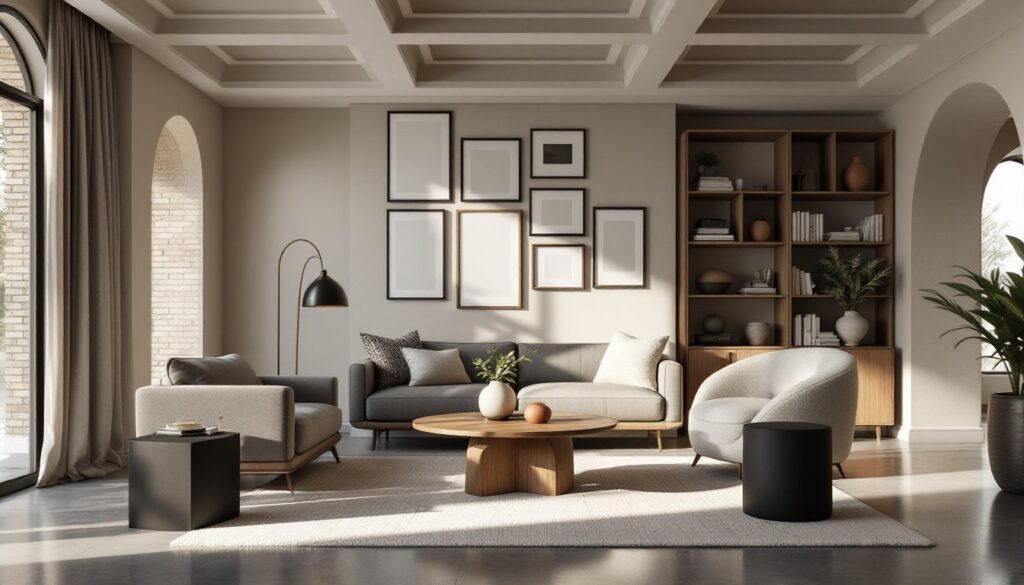
- Architectural features (coffered ceilings, rectilinear columns, rectangular windows)
Geometric forms dominate contemporary design approaches and work especially well in minimalist or industrial schemes. They read as intentional and crisp, but overuse can make a room feel sterile or institutional. If every piece in your space has hard edges and right angles, consider introducing contrast.
Natural and Organic Forms
Natural or organic forms mimic shapes found in nature, curves, asymmetry, irregular contours. These include spheres, ovals, and freeform silhouettes without rigid geometry.
Examples include:
- Rounded furniture (barrel chairs, tulip tables, kidney-shaped ottomans)
- Sculptural lighting (globe pendants, organic ceramic bases)
- Architectural curves (arched doorways, rounded plaster walls, vaulted ceilings)
- Natural wood with live edges, stone countertops with varied profiles
Organic forms feel approachable, relaxed, and human-scaled. They soften spaces dominated by geometry and introduce visual interest without adding pattern or color. When planning interior home layouts, blending organic and geometric forms prevents monotony and adds tactile variety.
How Form Influences Your Room’s Atmosphere
Form dictates mood as much as color does, sometimes more. A room painted neutral gray can feel either severe or soothing depending entirely on the shapes you place inside it.
Geometric forms project authority and formality. A rectangular dining table with straight-leg chairs creates a boardroom vibe, great for serious dinner parties, less inviting for casual family meals. Cube shelving and box-frame sectionals reinforce clean lines and make small spaces feel organized, but they can also read as cold if not balanced with softer elements.
Organic forms introduce warmth and ease. A round dining table encourages conversation by eliminating hierarchical head-of-table positions. Curved sofas and chairs guide traffic flow naturally without sharp corners to navigate around (a practical win if you’ve got kids or tight clearances). Spaces featuring home decor interior design principles often layer organic forms to create inviting, livable environments.
Scale and proportion also matter. Oversized forms, a bulky sectional, a massive farmhouse table, anchor a room and convey permanence, but they can overwhelm a small footprint. Petite forms, like delicate side tables and slim-profile seating, keep sightlines open and make spaces feel larger, though too many lightweight pieces can look insubstantial.
If your living room feels uncomfortable but you can’t pinpoint why, audit the forms. A wall of hard-edged furniture flanking a rigid fireplace with zero curves anywhere often translates to visual tension, even if the color palette is perfect.
Balancing Different Forms in One Space
Mixing forms isn’t about strict ratios, it’s about creating visual dialogue. Too much of one type flattens interest: a deliberate contrast makes individual pieces stand out.
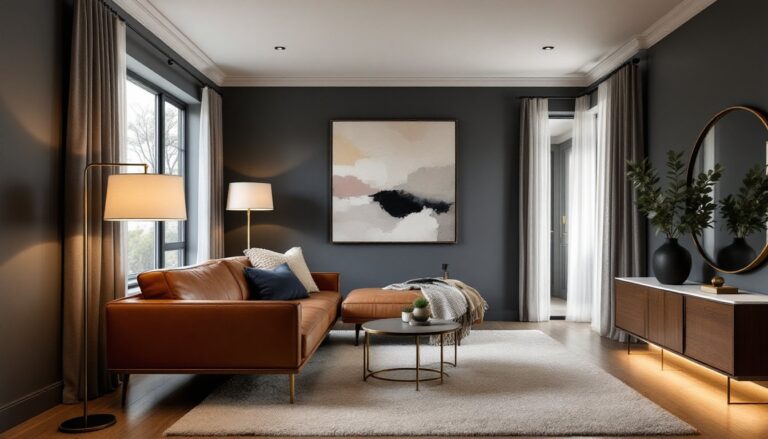
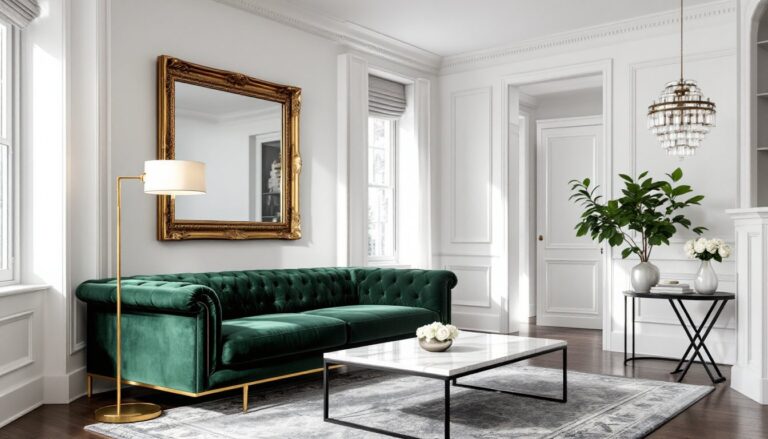
Start with dominant forms. Identify the largest or most fixed elements: your sofa, dining table, or built-in cabinetry. If those are geometric, introduce organic counterpoints through lighting, occasional seating, or decorative objects. A boxy sectional pairs well with a round coffee table or a curved floor lamp.
Conversely, if your anchor pieces are organic, say, a live-edge dining table or an arched alcove, balance them with geometric accessories: rectangular art, cube planters, or a grid-pattern rug.
Use repetition to unify. Repeating a form type in varied scales creates rhythm. Three round mirrors of different sizes on one wall echo the curve of a nearby barrel chair without feeling matchy. Similarly, a collection of rectangular frames in mixed dimensions reinforces geometry without monotony.
Watch the negative space. Overcrowding kills form contrast. If every surface holds an object, individual shapes blur into visual noise. Leave breathing room, at least 18–24 inches of clearance between major pieces, so each form reads clearly. This principle applies whether you’re creating design layouts from scratch or reworking existing rooms.
Test with mockups. Before committing, use painter’s tape on the floor to outline furniture footprints. Cardboard cutouts can represent sculptures or large planters. This low-tech method reveals how forms interact and whether you’ve left adequate negative space.
Practical Ways to Use Form in Your Home
Theory is useful: application gets the job done. Here’s how to deploy form intentionally, room by room.
Living rooms: Anchor with a geometric sofa, then soften with a round coffee table, curved accent chairs, or a dome pendant. If your architecture includes internal structural details like exposed beams or columns, their forms already add geometry, balance with organic textiles and sculptural accessories.
Dining areas: Round or oval tables suit small spaces and promote conversation: rectangular tables maximize seating in larger rooms. Pair whichever you choose with chairs of the opposite form language, geometric chairs with a round table, curved wishbone or Windsor chairs with a rectangular table. Explore options that align with current design and decor trends to keep your space feeling fresh.
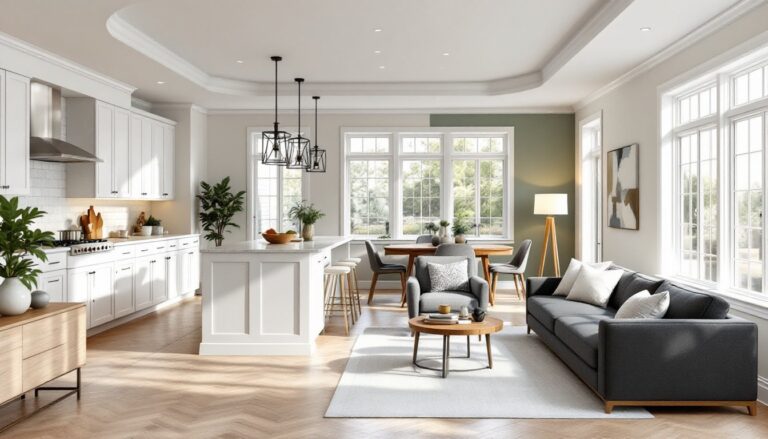
Kitchens: Cabinetry is inherently geometric (boxes stacked in grids). Introduce organic forms through bar stools with rounded seats, globe pendants over an island, or a curved range hood. If you’re planning a remodel involving decor and construction updates, consider arched cabinet openings or a curved island end to break up the boxy repetition.
Bedrooms: A rectangular bed frame and nightstands provide structure: soften with an upholstered headboard featuring gentle curves, round table lamps, or an oval mirror. Avoid placing all geometric forms on one side and all organic on the other, distribute them for balance.
Bathrooms: Vanities and tile are typically geometric. Add organic forms via round mirrors, vessel sinks, or sculptural freestanding tubs. Modern design showcased on sites like Dwell frequently highlights how curved fixtures humanize otherwise stark, tile-heavy bathrooms.
Materials matter too. Wood introduces organic form through grain and live edges even when cut into geometric shapes. Metal and glass reinforce geometry with their manufactured precision. Stone splits the difference, it’s natural but often shaped geometrically (think square marble tiles versus a river-rock accent wall).
Lighting as form. Fixtures aren’t just functional: they’re sculptural forms that float at eye level or above. A geometric chandelier (rectangles, hexagons) complements organic furniture: a Sputnik or globe pendant balances geometric cabinetry. For inspiration, check resources at Freshome showcasing how lighting form transforms room character.
DIY tip: Swapping out hardware, drawer pulls, cabinet knobs, light switches, is a low-cost way to shift form language. Switching from rectangular pulls to rounded or arched ones softens a kitchen without a gut renovation. This small change affects the overall form balance more than you’d expect.
Safety and code: If you’re modifying structural forms, removing walls, adding openings, or altering ceiling planes, consult local building codes and a structural engineer. Load-bearing walls can’t be removed without proper headers and support, and changes often require permits. Cosmetic form changes (furniture, fixtures, decor) don’t need permits, but anything touching framing, electrical, or plumbing likely does.