Table of Contents
ToggleSmall homes don’t have to feel cramped or cluttered. With smart design choices and practical strategies, even a 600-square-foot space can live comfortably and look twice its size. The key is making every square foot work harder, combining function with style, not sacrificing one for the other. This guide walks through proven design tactics that help homeowners stretch their space, from furniture that multitasks to visual tricks that expand sightlines. Whether renting a studio or downsizing to a compact house, these ideas deliver real-world results without requiring a full gut renovation.
Key Takeaways
- Small house interior design ideas succeed when furniture is scale-appropriate with exposed legs and serves multiple functions, such as ottoman storage benches or convertible dining tables that adapt to your space.
- Light, neutral paint colors and layered lighting (ambient, task, and accent) create the illusion of larger rooms by reflecting light and eliminating visual boundaries in small spaces.
- Smart vertical storage, including floor-to-ceiling shelving and wall-mounted systems, can increase usable space by 20 to 30 percent without expanding your square footage.
- Maintain baseline storage capacity of 10 to 15 percent of total square footage with strategic solutions like pull-out shelves, under-bed bins, and hidden storage in built-in benches.
- Scandinavian and minimalist design styles naturally complement small homes by emphasizing clean lines, neutral palettes, and purposeful décor over excess accumulation.
- Float furniture away from walls and use consistent flooring throughout to create visual flow and make compact spaces feel more expansive and open.
Smart Furniture Choices That Maximize Every Square Foot
Furniture in a small home should justify its footprint. If a piece only serves one purpose, it’s probably wasting space.
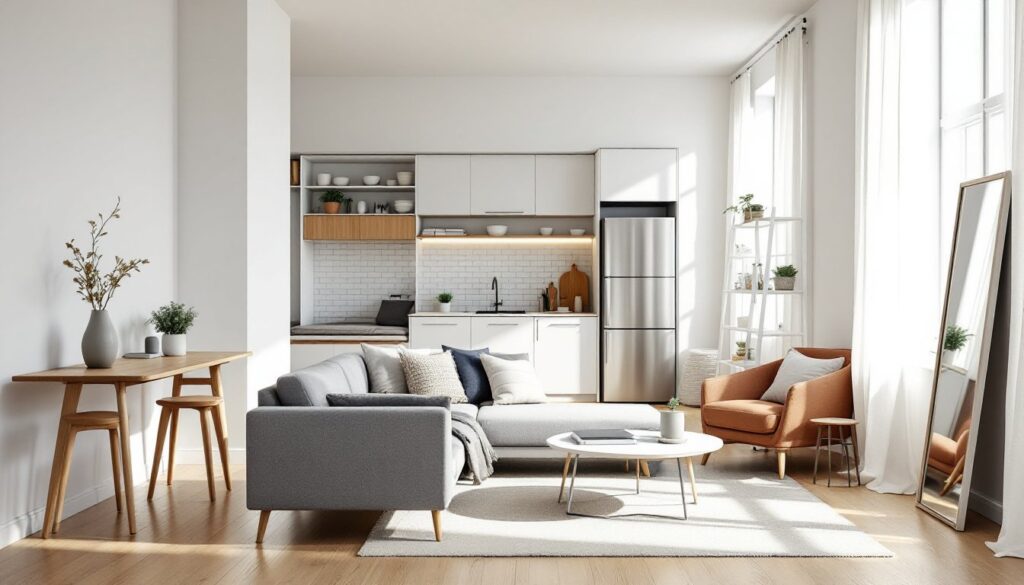
Start with scale-appropriate sizing. A full-depth sectional designed for a 20×20 living room will overwhelm a 12×14 space. Look for apartment-scale sofas with 68- to 76-inch widths and shallower seat depths (around 32 inches versus the standard 38). Armless chairs and benches take up less visual and physical space than overstuffed recliners.
Legs matter. Furniture with exposed legs, sofas, beds, tables, creates visual airflow underneath, making rooms feel less crowded. Solid-base pieces sit heavy and block sightlines. A platform bed with 6-inch legs beats a storage bed with solid sides for perceived spaciousness, even if the storage bed offers more cubic footage.
Consider modular and stackable options. Nesting tables, stackable stools, and modular shelving adapt to changing needs without permanent commitment. When guests arrive, pull out the extra seating. When they leave, tuck it away.
Multi-Functional Pieces for Small Spaces
Multi-functional furniture is the backbone of smart home design. A Murphy bed that folds into a wall-mounted desk converts a bedroom into a home office in seconds. Ottoman storage benches hide blankets, tools, or out-of-season clothing while providing seating or a footrest.
Convertible dining tables expand for dinner parties and collapse to console depth for daily use. Drop-leaf and butterfly-leaf designs add 18 to 36 inches of surface when needed. Some models include built-in storage for placemats or flatware.
Sofa beds have evolved beyond the lumpy futons of the ’90s. Modern sleeper sofas with gel-infused memory foam mattresses offer legitimate guest-bed comfort. Look for mechanisms that don’t require moving the sofa away from the wall, front-pull designs save floor space.
Don’t overlook lift-top coffee tables. The surface raises to dining or laptop height, and the cavity underneath holds remotes, magazines, or laptops. It’s a desk, dining table, and storage unit in one footprint.
Color and Lighting Strategies to Make Rooms Feel Larger
Paint is the cheapest way to add square footage, perceptually, at least. Light, neutral tones reflect more light than dark colors, making walls recede. Whites, soft grays, and warm beiges are workhorses in small spaces.
But “white walls” doesn’t mean boring. Use variations in sheen and texture. A matte ceiling, eggshell walls, and semi-gloss trim in the same color family adds depth without shrinking the room. Monochromatic schemes unify spaces, when walls, trim, and ceilings blend, the eye doesn’t stop to measure boundaries.
Avoid harsh color breaks. Painting an accent wall in a bold hue can chop a small room into even smaller sections. If color is non-negotiable, carry it onto adjacent walls or use it sparingly in accessories and textiles.
Lighting layers expand perceived space. Relying on a single overhead fixture flattens a room. Combine ambient (ceiling or recessed), task (desk lamps, under-cabinet strips), and accent (picture lights, sconces) sources. Aim for 100 lumens per square foot in living areas, adjustable with dimmers for flexibility.
Natural light is king. Skip heavy drapes. Use sheer panels, cellular shades, or even no window treatments if privacy allows. Mounting curtain rods closer to the ceiling and extending them beyond the window frame makes windows look larger and ceilings higher. Many cozy home interiors rely heavily on maximizing daylight to create warmth without clutter.
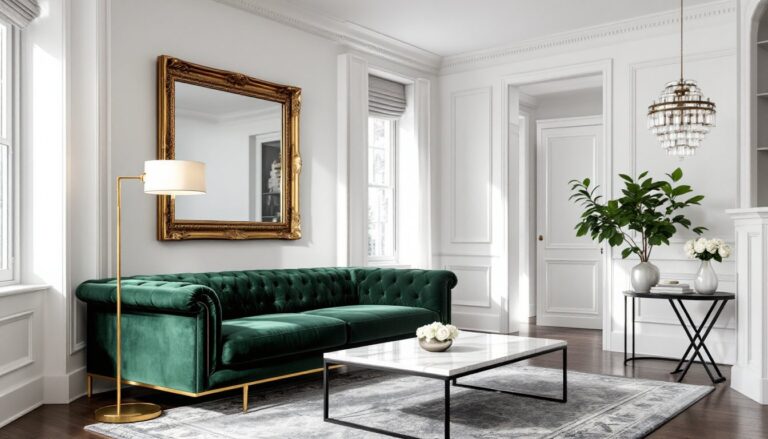
Mirrors are the oldest trick in the book for a reason. Position a large mirror opposite a window to double the light and create a faux opening. Mirrored closet doors work well in bedrooms, and mirrored backsplashes in kitchens reflect both light and views.
Clever Storage Solutions That Eliminate Clutter
Clutter kills the illusion of space. No amount of paint or lighting can fix a room packed with visible junk. If it’s out, it’s on purpose, everything else needs a home.
Baseline storage capacity in a small house should be 10 to 15 percent of total square footage. For a 700-square-foot home, that’s 70 to 105 cubic feet of storage, closets, cabinets, shelving, and built-ins combined. If current storage doesn’t hit that threshold, it’s time to add it.
Start in the kitchen. Install pull-out shelves in base cabinets to eliminate the black hole at the back. Add a pegboard or magnetic strip for utensils and knives. Use drawer dividers, most kitchen drawers waste 30 percent of their volume with loose items tumbling around.
In bathrooms, use the space above the toilet. A wall-mounted cabinet or floating shelves store towels and toiletries without eating into floor space. Over-the-door organizers work for cleaning supplies or hair tools.
Under-bed storage is prime real estate. Rolling bins or vacuum-sealed bags slide underneath platform beds or bed risers. Elevating the bed frame by 4 to 6 inches with risers (rated for the load) adds another 20 cubic feet of storage in a queen-size footprint.
Hidden Storage and Vertical Organization
Wall-mounted systems free up floor space and make rooms feel taller. Floor-to-ceiling shelving draws the eye upward and stores more per linear foot than waist-high bookcases. Use the top shelves for seldom-used items, seasonal decor, archival boxes, and keep daily-use items at arm level.
Consider built-in benches with lift-up seats in entryways or dining nooks. They provide seating and hide shoes, bags, or sports equipment. In tight spaces, every piece of furniture should multitask.
Vertical bike racks mount to studs and lift bikes off the floor. Some models hold two bikes in a 12-inch-wide footprint. Similarly, wall-mounted fold-down desks provide a workspace without a permanent desk footprint.
Inside closets, double-hang rods for shirts and pants. Most closets waste the vertical space between the single rod and the shelf. Adding a second rod at 40 inches (with the first at 80 inches) nearly doubles hanging capacity. Use shelf dividers to keep stacks of sweaters from toppling.
Magnetic spice racks on the side of a refrigerator, tension rods under sinks to hang spray bottles, and adhesive hooks inside cabinet doors, these small upgrades add up. Studies from Apartment Therapy show that vertical storage can increase usable space by 20 to 30 percent without expanding square footage.
Open Floor Plans and Visual Tricks for Spacious Living
Removing a non-load-bearing wall can transform two cramped rooms into one airy space. Before swinging a sledgehammer, confirm the wall isn’t structural. Load-bearing walls carry the weight of the floor or roof above, removing them without proper support (a beam and posts) risks collapse. Consult a structural engineer or contractor. Most jurisdictions require a permit for wall removal, even non-structural ones.
If walls must stay, use visual tricks. Replace solid doors with French doors or frosted glass sliders to borrow light and sightlines between rooms. Open doorways (without doors) work in less private areas like living-to-dining transitions.
Half-walls and pony walls (36 to 42 inches tall) define zones without blocking views. Top them with a countertop for additional workspace or display area.
Another approach: consistent flooring throughout. Running the same hardwood, luxury vinyl plank, or tile from room to room eliminates visual stopping points. The eye travels farther, making the home feel more expansive. Avoid transitions and borders unless required by material changes (like tile to carpet).
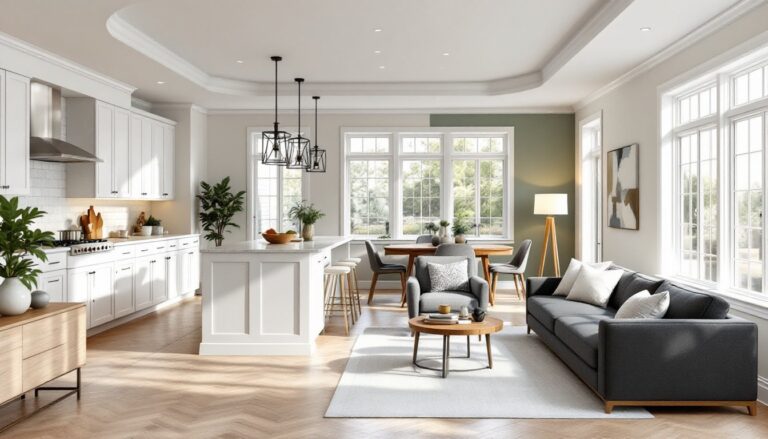
Furniture arrangement shapes flow. In open-plan spaces, use area rugs and furniture groupings to define zones, a rug and sofa for the living area, a table and chairs for dining, without walls. Keep pathways 36 inches wide minimum for comfortable traffic flow.
Float furniture away from walls when possible. A sofa pulled 12 inches off the wall, with a narrow console table behind it, creates a sense of depth and breathing room. Pushing all furniture against the perimeter makes a room feel smaller and more cluttered, not larger.
Some designers use minimalist design principles to further enhance openness by reducing visual noise and emphasizing negative space.
Small-Space Decorating Styles That Work Best
Not every design style suits a small footprint. Styles that emphasize clean lines, limited palettes, and purposeful accessories thrive in compact homes.
Scandinavian design fits small spaces naturally. It prioritizes function, neutral colors, natural light, and minimal ornamentation. Think light wood tones, white walls, and a few statement pieces rather than collections.
Modern minimalism strips away excess. It’s not about living with nothing, it’s about living with intention. Every item earns its place. Furniture has simple forms, and decorative objects are few but meaningful. Minimalism requires discipline but pays dividends in perceived spaciousness. Many resources from Homedit showcase minimalist small-space projects that balance aesthetics and livability.
Japandi (Japanese + Scandi) blends the warmth of Scandinavian design with Japanese wabi-sabi principles, beauty in imperfection and simplicity. Low-profile furniture, neutral palettes, and natural materials define the look. It’s calm, uncluttered, and ideal for small homes.
Mid-century modern can work if scaled correctly. Tapered legs, clean lines, and multifunctional pieces fit tight quarters. Avoid overstuffed upholstery and heavy wood finishes that weigh down a room.
Styles to approach cautiously: Farmhouse and maximalist eclectic can overwhelm small spaces. Farmhouse tends toward bulky furniture and abundant decor (shiplap, open shelving packed with dishware, oversized signs). Maximalism layers patterns, colors, and collections, great in a spacious loft, chaotic in a 500-square-foot cottage.
That said, personal style matters. If farmhouse speaks to someone, they can adapt it, swap bulky furniture for streamlined pieces, edit decor to a few favorites, and keep surfaces clear. The trick is editing ruthlessly. Bloggers at Young House Love often demonstrate how to adapt popular styles to smaller footprints through intentional editing and DIY modifications.
When selecting interior home design approaches, prioritize styles that emphasize restraint and functionality over ornament and accumulation. Small homes thrive on clarity, not chaos.