Table of Contents
ToggleWalk into any well-designed room and your eyes know something’s right before your brain catches up. That immediate sense of “this works” often comes down to symmetry, the oldest design trick in the book, borrowed straight from nature and classical architecture. Symmetrical balance interior design isn’t about stuffy formality or matching everything like a hotel lobby. It’s a reliable framework that brings order, calm, and visual weight distribution to any space, whether you’re arranging a living room or planning a bedroom refresh. And unlike trendy design moves that age fast, symmetry stays grounded. This guide breaks down what symmetrical balance actually is, why it works, and how to pull it off in your home without making it feel like a museum.
Key Takeaways
- Symmetrical balance in interior design creates calm and order by arranging equal visual weight on both sides of a central axis, making rooms feel more intentional and grounded.
- Symmetry differs from asymmetrical balance by using mirrored or equivalent elements rather than varied objects, and it’s more forgiving to implement without extensive design experience.
- Start with your room’s focal point (fireplace, bed, or window), center your largest furniture piece, and flank it with matching or visually equivalent accessories to achieve symmetrical balance.
- Avoid over-matching, ignoring scale, or forcing symmetry into asymmetrical spaces; instead, test layouts with painter’s tape or design software before committing to a final arrangement.
- Symmetrical balance works best in formal rooms, bedrooms, and entryways—not every space in your home needs symmetry to maintain visual interest and personality.
- Match lighting, decor, and textiles on both sides of your central axis, using pairs or balanced groupings on mantels, shelves, and walls to reinforce the symmetrical effect.
What Is Symmetrical Balance in Interior Design?
Symmetrical balance means arranging elements equally on both sides of a central axis, like folding a room down the middle and seeing mirror images. It’s the design equivalent of a properly balanced load: equal visual weight on each side creates stability.
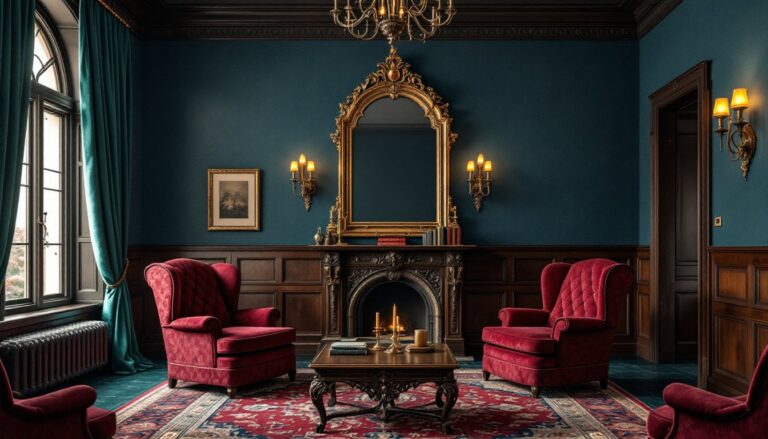
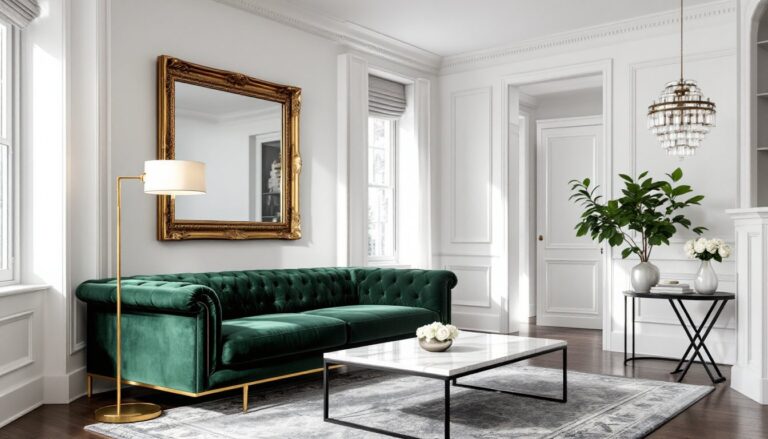
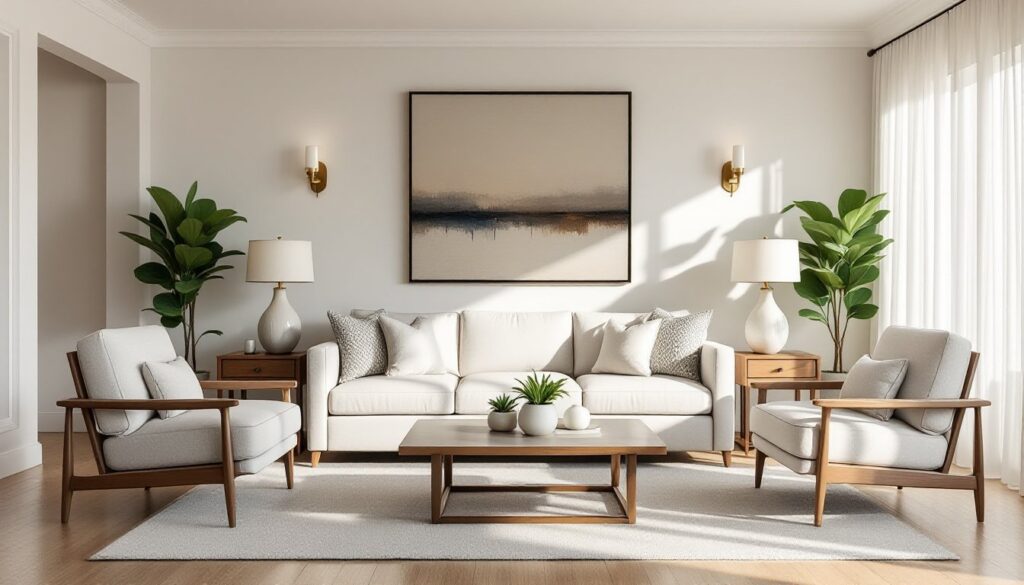
In practice, this might mean two matching armchairs flanking a fireplace, identical nightstands on either side of a bed, or a pair of sconces mounted equidistant from a centered mirror. The axis can be vertical (most common, running through the center of a wall or room) or horizontal (think a mantel with matching candlesticks on each end).
Symmetry differs from asymmetrical balance, where different objects achieve equilibrium through varied size, color, or placement, like balancing a large sofa with a cluster of smaller chairs. Asymmetry takes more design instinct to nail. Symmetry is forgiving.
This approach shows up everywhere in traditional and transitional interiors: formal dining rooms, classic bedrooms, entryways. It’s also foundational in contemporary interior design, where clean lines and balance go hand in hand. You’ll spot it in Georgian architecture, French provincial layouts, and even mid-century modern spaces that favor centered furniture groupings.
Key point: symmetrical balance doesn’t demand identical objects. It requires equivalent visual weight. A tall lamp on one side can balance a stack of books and a plant on the other, as long as mass and height feel equal.
Why Symmetrical Balance Creates Calm and Order
Humans are wired to recognize patterns. Our brains process symmetrical arrangements faster and with less effort, which translates to comfort. Rooms built on symmetry feel predictable in the best way, no visual scrambling to figure out where things belong.
This design strategy works especially well in high-traffic or multi-use spaces. A symmetrical living room layout guides movement and sight lines without confusion. A bedroom centered around a balanced headboard wall signals rest. Formal spaces like dining rooms benefit from the ceremonial quality symmetry brings.
Symmetry also anchors a room when finishes or colors vary. If you’re mixing wood tones, textile patterns, or paint treatments, a symmetrical layout provides a backbone that holds everything together. It’s the studs behind drywall, structure you don’t always see but rely on.
Psychologically, balance equals control. That’s why medical offices, hotels, and upscale retail spaces default to symmetry, it communicates professionalism and intentionality. In a home, it says someone thought this through.
One caution: too much symmetry without variation can feel rigid or generic. The trick is pairing the structure of symmetry with personal touches, art that isn’t matchy-matchy, textiles with texture differences, or one standout piece that breaks the grid slightly. Think of symmetry as the foundation, not the whole house.
How to Achieve Symmetrical Balance in Your Home
Pulling off symmetry isn’t about buying pairs of everything or hiring a designer. It’s about understanding your room’s natural axis and working from there. Start by identifying focal points, fireplaces, windows, beds, built-ins. These anchor your layout.
Furniture Arrangement for Symmetrical Design
Begin with the largest piece and center it on a wall or within the room. In a living room, that’s usually the sofa. Position it opposite or facing the focal point (fireplace, TV, window). From there, flank it with matching or visually equivalent side tables and lamps.
For seating groups, try two armchairs across from the sofa, each the same distance from the coffee table. If you’re working with a sectional, balance can come from pairing it with a single statement chair and ottoman on the opposite side, matched by height and bulk.
Bedrooms are the easiest symmetry win. Center the bed on the longest wall, then add matching nightstands and lamps. If space allows, add a bench or pair of stools at the foot. Many homeowners overlook how planning with interior design software can help visualize furniture placement and test symmetrical layouts before moving heavy pieces.
Dining rooms practically demand symmetry: center the table under a chandelier, use even numbers of chairs per side, and add matching buffet lamps or decor on a sideboard. For tighter spaces, a round table with four evenly spaced chairs achieves the same effect.
Pro tip: Measure and mark your center axis with painter’s tape on the floor before arranging furniture. It’s a simple layout trick contractors use when rough-framing rooms, and it works just as well for decor.
Decor and Accessories Placement
Once furniture is set, accessories carry the balance through. Start with lighting: matching table lamps, sconces, or pendants on either side of a focal point reinforce symmetry. Make sure bulb wattage and shade height match, mismatched light levels throw off the effect.
Wall decor follows the same rule. Frame matching prints or mirrors and mount them equidistant from a central point. For gallery walls, create a symmetrical grid rather than an organic cluster. Use a level and consistent spacing (typically 2–4 inches between frames).
On mantels, bookshelves, and consoles, think in pairs or balanced groupings. Two candlesticks flanking a centered vase, or matching stacks of books on each end of a shelf. Odd numbers work if the central piece is clearly dominant and flanked evenly.
Textiles offer subtle symmetry: matching throw pillows on a sofa (same fabric, or same size with coordinating colors), identical curtain panels pulled back evenly, or a pair of area rugs in a large open space. The design principles of minimalism often rely on this kind of restrained, balanced repetition.
Don’t forget vertical balance. If one side of a room has a tall bookcase, counter it with a floor lamp or plant of similar height on the other side. Designers sometimes reference this approach in dining room layouts where hutches or cabinets are paired with tall mirrors or art.
For smaller accents, match materials and finishes even if shapes differ slightly. Brass frames on both sides, ceramic vases in the same glaze family, or wood tones that coordinate. This creates what designers call “visual rhythm”, a repeating beat your eye follows across the space.
Common Mistakes to Avoid with Symmetrical Balance
Over-matching. Symmetry doesn’t mean everything has to be identical. Two nightstands can be the same style but different finishes, or the same height but different shapes. Perfect matching can look staged, like a showroom rather than a home. Resources like Homedit showcase symmetrical spaces with enough variation to feel lived-in.
Ignoring scale. Placing two small lamps on either side of a king bed under a massive headboard won’t create balance, it’ll look undersized. Visual weight matters as much as placement. Use a tape measure: side tables should be within 2–4 inches of mattress height, and lamps should be proportional to the table base.
Forcing symmetry in asymmetrical architecture. Rooms with off-center windows, angled walls, or multiple doorways resist symmetry. Don’t fight the bones of the space. Instead, create a symmetrical zone, a balanced furniture grouping or wall arrangement, and let the rest flow naturally. Many modern design concepts embrace this hybrid approach.
Forgetting function. A perfectly balanced room that doesn’t work for daily life is just frustration with good bones. Make sure pathways stay clear (minimum 36 inches for primary traffic routes), outlets are accessible, and furniture scale fits the room. Symmetry is a tool, not a mandate.
Skipping the test arrangement. Before mounting hardware or committing to a layout, mock it up. Use painter’s tape to outline furniture footprints, lean art against walls before drilling, or try a design app to preview layouts digitally. Measure twice, arrange once.
Neglecting lighting. Symmetrical furniture with asymmetrical lighting kills the effect. If you add a lamp on one side, add one on the other, even if you only turn one on regularly. And match bulb color temperature (2700K–3000K for warm residential spaces).
Overdoing it room by room. Not every room needs symmetry. A home full of perfectly mirrored spaces can feel monotonous. Use symmetry where it serves you, formal rooms, bedrooms, entryways, and let kitchens, home offices, or creative spaces follow function over form. Designers often weave varied design and decor strategies throughout a home to maintain interest.
Conclusion
Symmetrical balance gives any room a grounded, intentional feel without requiring a design degree or a contractor. It’s a practical framework that works whether you’re staging a formal living room or just trying to make a bedroom feel more pulled-together. Identify your axis, match visual weight, and don’t obsess over perfection. The best interiors balance structure with personality, and symmetry gives you the structure to build on.