Table of Contents
ToggleOpen floor plans have dominated residential design for the past two decades, tearing down walls between kitchens, dining rooms, and living areas. But dropping a sledgehammer on load-bearing walls doesn’t automatically create a functional, inviting space. The challenge isn’t removing walls, it’s designing zones that work independently while flowing together. Whether converting an existing home or working with new construction, successful open-concept design requires intentional choices about furniture placement, materials, lighting, and traffic flow. This guide walks through practical strategies to maximize function and style in open floor plans without the trial-and-error that costs time and money.
Key Takeaways
- Open floor plan interior design combines kitchens, dining, and living areas into one continuous space, but success requires intentional choices about furniture placement, lighting, and traffic flow rather than simply removing walls.
- Define zones without walls using layered strategies: area rugs, flooring transitions, ceiling treatments, and half-walls preserve the open feel while creating distinct areas for different activities.
- Flooring choices, color blocking, and material variation provide visual separation—keep transitions minimal and stick to three main colors plus neutrals to avoid fragmenting the space.
- Layer lighting at multiple heights and intensities with ambient, task, and accent fixtures; use dimmers and zone-specific controls so lighting adapts to each area’s function throughout the day.
- Avoid critical mistakes like ignoring acoustics, poor furniture scale, inadequate HVAC, and clutter visibility; always hire a structural engineer before removing any walls to prevent safety and legal issues.
- Maximize natural light distribution and apparent square footage while maintaining sightlines for supervision and entertaining, making open floor plans both functionally superior and more valuable at resale.
What Is Open Floor Plan Interior Design?
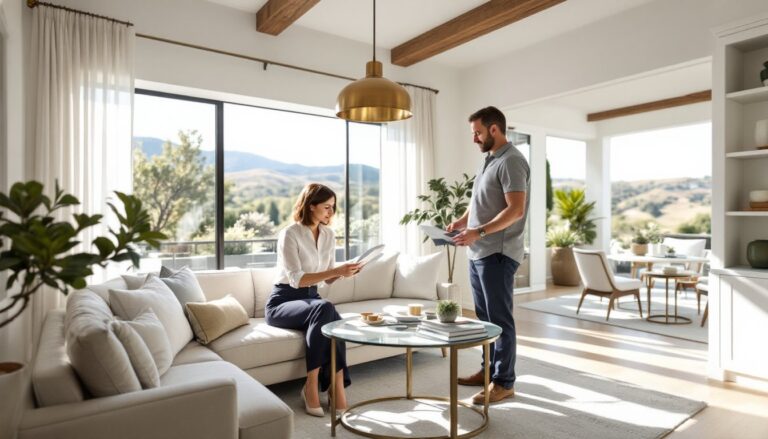
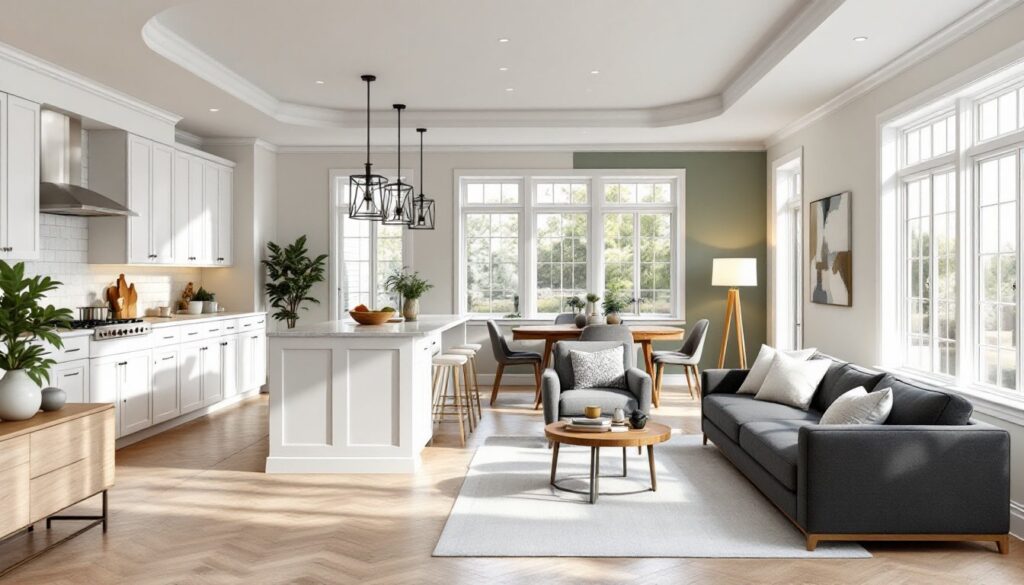
Open floor plan interior design removes traditional walls and doorways between primary living spaces, typically combining the kitchen, dining area, and living room into one continuous zone. Unlike older home layouts with enclosed, single-purpose rooms, open concepts emphasize sightlines, shared space, and flexible functionality.
The layout gained popularity in mid-century modern architecture and surged in the 1990s as families shifted toward casual entertaining and multipurpose living. From a structural standpoint, creating an open floor plan often requires removing non-load-bearing partition walls or, if dealing with load-bearing walls, installing beams or headers to redistribute the load. This type of structural modification typically requires permits and engineering approval per the International Residential Code (IRC), so consult a structural engineer or licensed contractor before swinging a hammer.
Open floor plans aren’t one-size-fits-all. A true great room combines all three zones in one undivided space, while semi-open plans might keep a kitchen partially separated with a half-wall, island, or column structure. The defining feature is visual and physical connectivity, standing at the stove, you can see and interact with people in the living area.
Benefits of Open Floor Plans for Modern Homes
Open concepts deliver measurable advantages for daily living and resale value. Natural light distribution improves dramatically when walls don’t block windows, light from south-facing dining room windows can reach deep into a kitchen or living space, reducing daytime reliance on artificial lighting. Homeowners often see immediate impacts on interior home design when maximizing available daylight.
Sightlines and supervision matter, especially for households with young children or anyone who spends time cooking while others gather. Parents can prep dinner and still monitor kids doing assignments or playing, no more shouting through walls. This same benefit extends to entertaining: hosts aren’t isolated in the kitchen while guests sit in another room.
From a practical standpoint, open layouts increase perceived square footage. A 600-square-foot combined space feels significantly larger than three 200-square-foot rooms. This perceptual boost translates to real value at resale: homes with open floor plans consistently attract higher buyer interest and pricing in markets favoring contemporary layouts.
Flexibility is another functional win. Without fixed walls defining each zone, homeowners can reconfigure furniture and adapt the space as needs change, a dining table might shift closer to the kitchen during everyday use and move toward the living area for large gatherings. This adaptability supports long-term livability without costly renovations.
Defining Zones Without Walls
Without walls, defining distinct areas requires deliberate design choices. The most effective approach combines multiple strategies rather than relying on a single divider. Modern home decor interior often relies on layered zone definition for successful open layouts.
Area rugs anchor zones and provide visual boundaries. A 9’×12′ or 8’×10′ rug under a seating group defines the living area, while a smaller rug beneath the dining table establishes that zone. Ensure rugs are large enough, at least the front legs of sofas and chairs should sit on the rug, and dining chairs should remain on the rug even when pulled out.
Flooring transitions create subtle separation. Continuing hardwood from the living area into the kitchen maintains openness, but switching to luxury vinyl plank (LVP) or tile in the kitchen establishes a functional boundary and improves durability in a high-traffic, spill-prone zone. Keep transitions minimal: too many flooring changes fragment the space.
Ceiling treatments define zones from above. A coffered ceiling or tray ceiling over the dining area, or exposed beams over the living space, draws the eye upward and designates specific zones. Changes in ceiling height, even a six-inch drop, create definition without blocking sightlines. This technique pairs well with lighting strategies to reinforce boundaries.
Half-walls and pony walls provide physical separation while preserving openness. A 42-inch pony wall with a countertop between the kitchen and dining area creates a subtle boundary and adds functional surface space. Columns or partial dividers achieve similar effects, especially when supporting structural beams required after wall removal.
Furniture Arrangement and Layout Tips
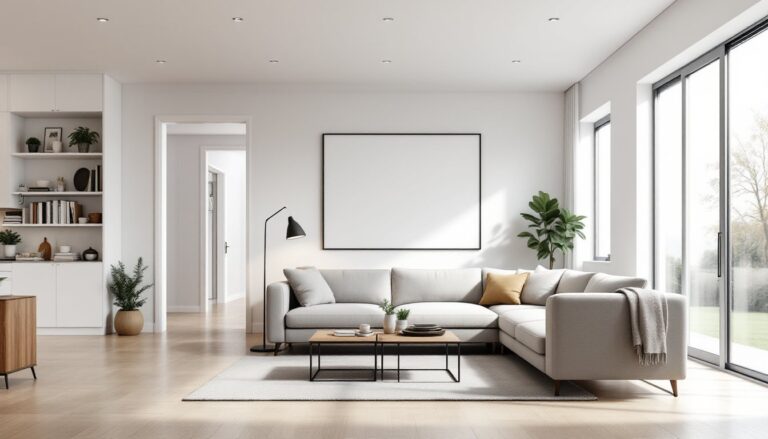
Floating furniture away from walls is the most effective arrangement strategy for open floor plans. Position a sofa perpendicular to the kitchen or facing away from it to create a clear living zone. The sofa back acts as a room divider without blocking views or light.
Back-to-back furniture placement maximizes space efficiency. Place a console table behind the sofa to define the living area boundary while providing surface space for lamps or décor. Similarly, position a bookcase or low shelving unit perpendicular to a wall to separate zones without building barriers.
Traffic flow dictates furniture placement. Map primary pathways, from entry to kitchen, kitchen to dining, living area to hallway, and keep these routes at least 36 inches wide, ideally 42–48 inches for comfortable passage. Don’t force foot traffic through the center of a seating area or behind dining chairs in use.
Furniture scale matters more in open layouts than in enclosed rooms. Oversized sectionals can dominate and fragment a space, while undersized pieces feel lost. Choose appropriately scaled furniture and avoid pushing everything against walls, negative space is functional, not wasted.
Choosing Colors and Materials to Create Visual Separation
Color and material choices provide visual definition without physical barriers. A cohesive palette unifies the space, while strategic variation delineates zones.
Accent walls anchor specific areas. Paint the wall behind the living room seating in a deeper or contrasting color to define that zone while keeping other walls neutral. Alternatively, use shiplap, board-and-batten, or textured wallpaper on one wall to add dimension and establish boundaries. For those considering minimalist home design, subtle texture rather than bold color often achieves cleaner separation.
Color blocking by zone means assigning a slightly different palette to each area while maintaining overall harmony. The living area might feature warm grays and navy accents, the dining zone could introduce brass fixtures and deeper wood tones, and the kitchen might lean toward whites and lighter woods. The key is a unifying thread, perhaps all three zones share the same trim color or repeat one accent color.
Material variation reinforces boundaries. Pair painted cabinetry in the kitchen with natural wood furniture in the living and dining areas. Use metal and glass in one zone, upholstered textiles in another, and natural fiber elements like jute or rattan in a third. These shifts signal transitions without requiring walls.
Vertical surfaces beyond walls matter, too. A kitchen backsplash in subway tile or zellige creates a distinct kitchen identity, while wood paneling or fabric-wrapped acoustic panels on a living room wall establish a different character. Keep materials consistent in quality and finish level, mixing builder-grade laminate with high-end stone looks disjointed rather than intentional.
Avoid overcomplicating the palette. Stick to three main colors plus neutrals, with no more than two accent colors. Too many competing colors and materials fracture an open space rather than defining it. Leading home decor and design resources consistently emphasize restraint and repetition for cohesive open plans.
Lighting Strategies for Open Concept Spaces
Lighting is the most overlooked element in open floor plans and one of the most critical for functionality. A single central fixture won’t cut it, open spaces require layered lighting at multiple heights and intensities.
Ambient lighting provides overall illumination. Recessed LED downlights spaced every 4–6 feet on a grid pattern offer even, shadow-free light. Aim for 50–75 lumens per square foot in living areas, 70–80 in kitchens. Use dimmers on all ambient circuits to adjust for time of day and activity.
Task lighting serves specific functions. Under-cabinet LED strips or puck lights illuminate kitchen counters for prep work. Pendant lights over an island or peninsula provide focused light exactly where it’s needed, hang pendants 30–36 inches above countertops, and space multiple pendants 24–30 inches apart. A reading lamp beside a sofa, a floor lamp near a chair, or a desk lamp in a assignments zone all qualify as task lighting.
Accent lighting adds drama and reinforces zones. Track lighting or adjustable gimbal recessed fixtures can highlight artwork or architectural features. LED strip lighting along a tray ceiling or under a kitchen island’s toe kick creates subtle, indirect glow that defines boundaries. Wall sconces flanking a dining area or living space establish that zone’s identity.
Fixture selection visually connects or separates zones. Matching metal finishes across all fixtures, matte black, brushed nickel, or aged brass, unify the space. Alternatively, use different fixture styles in each zone while repeating one finish to maintain cohesion. A modern drum pendant over the dining table, industrial cage pendants over the island, and a geometric chandelier in the living area can coexist if they share a finish and scale appropriately.
Control systems matter for flexibility. Install separate switches or smart controls for each zone so lighting can adapt to use, bright kitchen lighting during meal prep, dimmed living area lighting for movie night, and accent lighting for ambiance. For those exploring new home interior planning, designing electrical and lighting circuits during construction prevents costly retrofits.
Common Mistakes to Avoid in Open Floor Plan Design
Open floor plans amplify design mistakes because there are fewer walls to hide behind. These missteps occur repeatedly and are worth avoiding upfront.
Ignoring acoustics tops the list. Hard surfaces, wood floors, tile, drywall, glass, bounce sound around open spaces, creating echo and noise transfer. Add area rugs, upholstered furniture, curtains or drapes, and acoustic panels to absorb sound. A fabric-wrapped panel behind the TV or on a kitchen wall makes a measurable difference. Without sound control, an open floor plan becomes a noisy, chaotic space rather than an inviting one. Additional guidance on balancing aesthetics and function appears in discussions of home decor and interior strategies.
Poor furniture scale and placement fragments the space. Pushing all furniture against walls creates a bowling alley effect. Oversized sectionals block sightlines and foot traffic. Arrange furniture to create conversation areas and define zones, not to maximize seating quantity.
Inadequate or mismatched lighting leaves zones feeling disconnected or poorly lit. Relying on a single overhead fixture in a 600-square-foot open area means the center is bright and the edges are dim. Layer lighting types and distribute fixtures throughout the space. Successful examples of creative open layouts can be found in featured living room plans that highlight fixture placement.
Ignoring HVAC and ventilation creates comfort problems. Open spaces require properly sized HVAC systems to heat and cool effectively. Cooking odors and humidity spread quickly without walls, so invest in a quality range hood rated at 300+ CFM for typical home cooking and higher for gas ranges. Consult an HVAC contractor when modifying walls to ensure ductwork and returns are adequate for the new layout.
Skipping structural evaluation before wall removal is dangerous and often illegal. Even walls that appear non-load-bearing may carry point loads or house essential utilities. Hire a structural engineer to assess and design beam installation if needed. Pull permits as required. Skipping this step can lead to sagging ceilings, cracked drywall, or catastrophic failure. It’s not a DIY shortcut area.
Clutter visibility increases dramatically in open floor plans. Kitchen messes, piles of mail, and stacks of laundry are visible from every angle. Build in adequate closed storage, cabinets, closets, built-in benches with hidden compartments, to keep visual clutter under control. Open shelving works for styled décor but fails for everyday chaos. Practical solutions for managing open spaces without sacrificing style appear in professional design advice focused on livable layouts.
By addressing acoustics, scale, lighting, mechanical systems, structure, and storage upfront, open floor plans deliver on their promise of bright, flexible, connected living spaces rather than becoming expensive regrets.