Table of Contents
ToggleChoosing an interior design style isn’t just about picking pretty colors or following trends. It’s the foundation for every material choice, finish selection, and furnishing decision you’ll make in your home. Whether you’re planning a full renovation or updating a single room, understanding design styles helps you create a cohesive look that functions well and feels authentically yours. This guide breaks down the most popular interior design styles in practical terms, what defines them, what materials and finishes to use, and how to execute each look without turning your home into a showroom that nobody actually lives in.
Key Takeaways
- Interior design styles provide a practical framework that prevents costly mistakes by clearly defining materials, finishes, and aesthetic choices before making major purchases.
- Modern and contemporary styles emphasize clean lines and neutral palettes, while traditional design draws on European elegance with ornate details, and transitional style bridges the two approaches.
- Farmhouse style remains popular for DIY projects because it uses accessible materials like shiplap and reclaimed wood, but requires restraint to avoid kitsch—focus on functional vintage pieces rather than decorative excess.
- Industrial and mid-century modern designs add bold character through statement fixtures, geometric patterns, and mixed materials, but work best as accent elements in homes with standard construction rather than complete transformations.
- Choose an interior design style based on your home’s existing architecture, lifestyle needs, skill level, and budget—test choices with reversible materials like paint before committing to larger renovations.
- Start with one high-impact room and execute it thoroughly to establish your design direction, allowing your style to evolve naturally as you tackle subsequent spaces.
What Are Interior Design Styles and Why Do They Matter?
Interior design styles are recognized frameworks that group together specific materials, colors, furniture profiles, and architectural details. Think of them as a visual language, once you understand the vocabulary, you can communicate clearly with contractors, designers, and even paint store clerks about what you’re trying to achieve.
Knowing your style prevents expensive mistakes. It stops you from buying a $1,200 velvet Chesterfield sofa that clashes with your shiplap accent wall, or installing ornate crown molding in a space that’s meant to feel streamlined. Each style has inherent material choices: farmhouse leans on reclaimed wood and matte finishes, while contemporary uses metal, glass, and high-gloss surfaces.
More practically, design styles help you make decisions faster. When you’re standing in a tile showroom staring at 400 options, knowing you’re executing a mid-century modern kitchen immediately narrows it down to geometric patterns, terrazzo, or simple subway tile, not busy Moroccan zellige.
Styles also affect resale value and buyer appeal, though that shouldn’t be your only consideration. A well-executed design that fits the home’s architecture and neighborhood will always outperform a trendy but poorly matched interior.
Modern and Contemporary: Sleek, Clean, and Minimalist
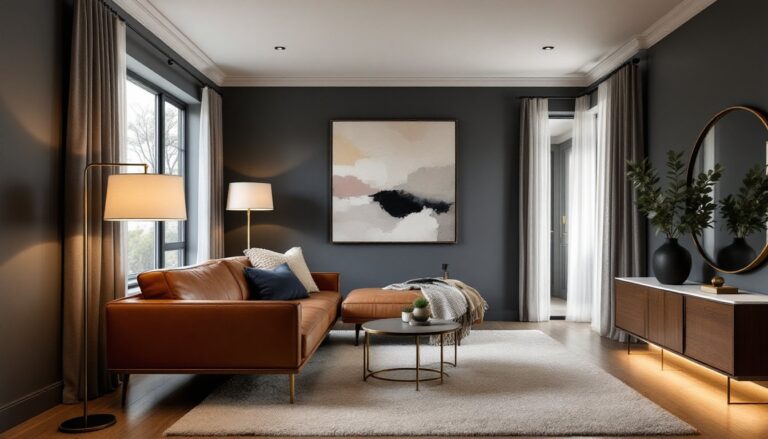
Modern and contemporary are often used interchangeably, but they’re technically different. Modern refers to a specific era, roughly 1920s to 1950s, characterized by clean lines, organic curves, and a rejection of ornamentation. Contemporary means “of the moment” and evolves with current trends, though today’s contemporary style borrows heavily from modern principles.
Both styles share key traits: open floor plans, neutral palettes (white, gray, black, beige), and an emphasis on natural light. Materials include steel, glass, concrete, and natural wood with minimal staining. Furniture sits low to the ground with simple profiles, no carved legs or tufted backs. For those interested in minimalist home approaches, these styles provide a strong starting point.
In practice, this means:
• Flooring: Wide-plank hardwood (often white oak or walnut), polished concrete, or large-format tile (24″×24″ minimum).
• Walls: Flat paint in neutral tones, or accent walls in textured materials like wood slat paneling or poured concrete.
• Windows: Floor-to-ceiling when possible, with minimal or no window treatments. If privacy is needed, use roller shades or sheer panels, never heavy drapes.
• Lighting: Recessed LED fixtures, pendant lights with simple geometric shapes, and track lighting.
This style requires discipline. Every item must earn its place, which means you can’t hide clutter behind decorative excess. Storage solutions need to be built-in or intentionally designed. Many homeowners find that sustainable home design principles align well with modern aesthetics, given the emphasis on quality materials and purposeful space planning.
DIY tip: Achieving clean lines often means upgrading trim and doors. Replace traditional baseboard with simple 1×4 or 1×6 boards with a square profile. Swap dated panel doors for flat-slab or shaker-style doors. These are intermediate carpentry projects but make a massive visual impact.
Traditional and Transitional: Timeless Elegance Meets Flexibility
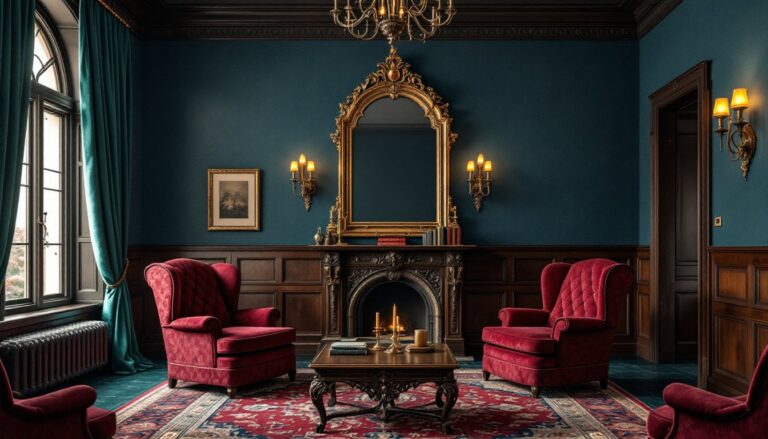
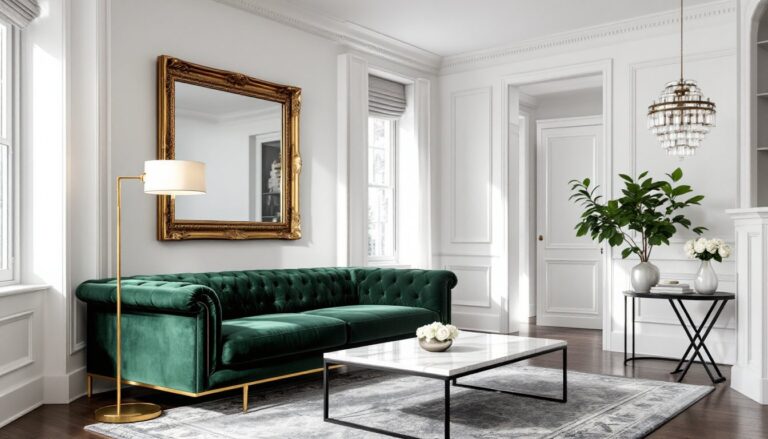
Traditional design draws from European decorative arts, think English manor homes and French châteaus. It’s formal, symmetrical, and rich with architectural detail: crown molding, chair rails, wainscoting, coffered ceilings, and built-in cabinetry. Wood tones are warm (cherry, mahogany, walnut), and fabrics include velvet, silk, damask, and brocade.
Color palettes are layered: deep reds, golds, greens, and blues, often with wallpaper featuring florals or damask patterns. Furniture has turned legs, curved arms, and is often upholstered. Layering is key, rugs on rugs, multiple throw pillows, table lamps plus floor lamps plus sconces.
Traditional style requires investment in millwork and trim. Installing crown molding means measuring inside and outside corners, cutting precise miters (a miter saw is essential here), and often coping inside corners for tight joints. Wainscoting involves leveling horizontal rails, calculating stile spacing, and managing expansion and contraction of wood panels.
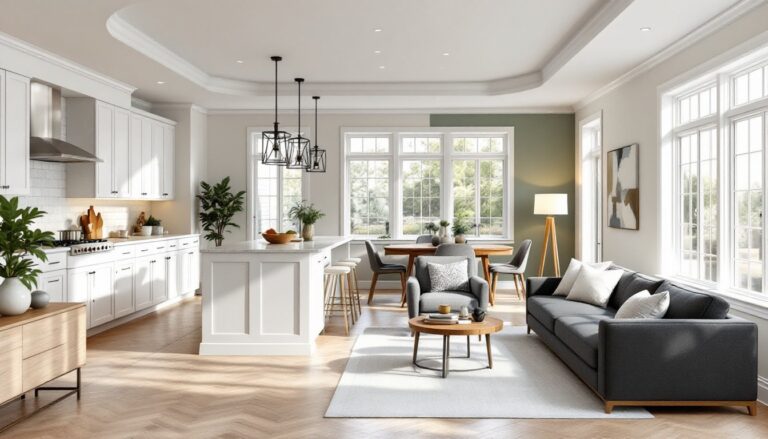
Transitional style is the bridge between traditional and contemporary. It keeps traditional’s warmth and comfort but strips away heavy ornamentation. Think neutral palettes (grays, taupes, soft whites) with cleaner-lined furniture that still feels substantial. Fabrics are simpler, linen, cotton, wool, and wood finishes are lighter or painted.
Key differences:
• Traditional: Dark wood, ornate hardware (oil-rubbed bronze with backplates), formal dining rooms, heavy drapery with valances.
• Transitional: Lighter wood or painted finishes, simple hardware (brushed nickel or matte black knobs), flexible spaces, tailored window treatments without excess fabric.
This style works well if you’re updating an older home with good bones. You can keep existing trim and molding but lighten the palette with paint. Benjamin Moore’s Simply White or Sherwin-Williams’ Agreeable Gray are go-to transitional colors, they work with both warm and cool undertones.
Farmhouse and Rustic: Cozy Comfort with Natural Charm
Farmhouse style has dominated DIY and home improvement content for the past decade, and for good reason, it’s approachable, forgiving, and uses accessible materials. Core elements include shiplap, reclaimed wood, barn doors, apron-front sinks, open shelving, and a neutral palette (white, cream, gray, with black accents).
Modern farmhouse (the version you see most often) blends rustic materials with cleaner lines. Think white shaker cabinets with matte black hardware, not knotty pine with wrought iron hinges. Wood beams are often added (or faux beams installed) for visual weight. Fixtures are industrial-inspired: cage lights, gooseneck sconces, matte black faucets.
Materials and finishes:
• Shiplap: Actual shiplap has a rabbet joint: what most people install is tongue-and-groove pine or plywood with a nickel gap. Prime all sides before installation to prevent cupping, and use a pneumatic brad nailer for clean installation. For unique textures, elements of home decor design can tie the farmhouse look together.
• Reclaimed wood: Real reclaimed lumber (from barns, factories) is expensive and often requires denailing, planing, and sealing. Alternatively, new pine can be distressed with chains, screws, and stain to mimic age.
• Countertops: Butcher block, soapstone, or white quartz that mimics marble. Avoid busy granite patterns.
Rustic style takes farmhouse further into rough-hewn territory. Think log cabins and mountain lodges: heavier wood furniture, stone fireplaces, leather upholstery, and antler chandeliers (if that’s your thing). Colors are earthier, browns, deep greens, burnt orange.
A word of caution: Farmhouse can tip into kitsch quickly. Limit the “Live, Laugh, Love” signs and galvanized buckets. Focus on functional vintage pieces, actual enamelware, real ladder shelving, quality textiles, and the style stays grounded. Platforms like Freshome regularly feature farmhouse projects that balance charm with restraint.
Safety note: When installing barn doors, make sure the wall structure can support the track system (typically requires blocking between studs or mounting to solid framing). These doors are heavy, 60 to 100+ pounds, and improper mounting is both a safety hazard and a drywall disaster waiting to happen.
Industrial and Mid-Century Modern: Bold Statements from Past Eras
Industrial design is pulled directly from converted warehouses and factories: exposed brick, ductwork, steel beams, concrete floors, and metal-frame windows. The palette is neutral with raw material tones, grays, blacks, browns, with metal finishes in black iron or galvanized steel.
Furniture is utilitarian: metal stools, wood-top workbenches as dining tables, wire shelving, factory carts repurposed as coffee tables. Lighting is statement-making, Edison bulbs in cage pendants, pulley systems, oversized floor lamps with articulating arms.
Executing industrial style in a typical home requires some strategic faking. Most houses don’t have exposed brick or concrete floors, so you’re adding elements:
• Brick veneer or faux brick panels for accent walls (much lighter and less expensive than real brick).
• Exposed conduit or pipe for light fixtures and shelving supports (using black iron pipe fittings from the plumbing aisle).
• Concrete-look flooring: Polished concrete overlays or luxury vinyl plank that mimics concrete (easier to install and warmer underfoot).
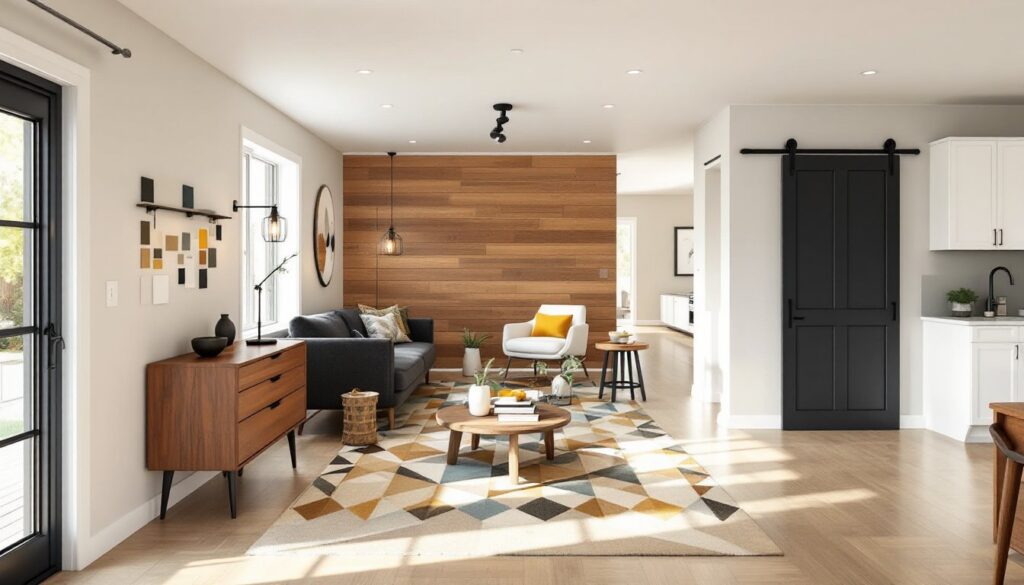
Mid-century modern (MCM) dates to roughly 1945-1969 and remains wildly popular. It’s characterized by organic curves, tapered legs, geometric patterns, and a mix of natural and man-made materials, teak wood with molded plastic, walnut with fiberglass, brass with Formica.
Colors are bolder than modern/contemporary: mustard yellow, burnt orange, avocado green, teal. But they’re used as accents against neutral bases (white, gray, natural wood). Furniture is iconic: Eames lounge chairs, tulip tables, sunburst clocks.
For DIY execution:
• Wood paneling: Consider horizontal wood slat walls (similar to what’s seen in Danish interior design) in walnut or teak tones, creates instant MCM warmth.
• Flooring: Original MCM homes often had terrazzo, cork, or parquet. Today, engineered hardwood in medium tones or patterned tile works well.
• Hardware and fixtures: Swapping cabinet hardware to brass or brushed gold and updating light fixtures to sputnik chandeliers or globe pendants delivers immediate MCM character.
Both styles benefit from high ceilings and good bones. In homes with 8-foot ceilings and standard construction, be selective, one or two strong elements (an accent wall, a statement light fixture) goes further than trying to transform the entire space. Design inspiration from Decoist often highlights how to incorporate industrial and MCM elements without overwhelming a room.
How to Choose the Right Interior Design Style for Your Home
Choosing a style isn’t about picking your favorite Pinterest board. Start with your home’s existing architecture. A 1920s bungalow fights you if you try to force ultra-modern minimalism, work with the craftsman details instead. A 1960s ranch is begging for mid-century modern. A new-build with builder-grade finishes? That’s your blank canvas for farmhouse, contemporary, or transitional.
Ask practical questions:
• How do you live? Formal traditional doesn’t work if you have three kids and two dogs. Industrial concrete floors are cold and hard, great for lofts, less great for bedrooms.
• What’s your skill level? Farmhouse and rustic are DIY-friendly (wood work, paint, simple millwork). Traditional requires precision carpentry and often professional help for crown molding, wainscoting, and built-ins.
• What’s your budget? Modern and contemporary can get expensive fast, high-quality materials and clean lines mean every imperfection shows. Farmhouse is budget-friendly if you DIY and shop secondhand.
• What do you own already? If you’ve accumulated traditional furniture over the years, transitional might be your easiest pivot. Starting from scratch? That’s freedom to commit fully to one style.
Test before committing. Paint is cheap and reversible, sample a modern neutral versus a warm traditional color in the same room and live with it for a week. Buy one statement piece (a mid-century credenza, an industrial shelf) and see if it feels right before overhauling everything.
Don’t mix too many styles in one space. Mixing modern and rustic creates “mountain modern” (intentional). Mixing traditional, farmhouse, and industrial in the same room creates confusion. You can vary style by room, farmhouse kitchen, transitional living room, but keep each space cohesive within itself. Projects that explore cozy home design show how sticking to one clear style per room maintains visual harmony.
Finally, ignore the idea that you have to pick one style forever. Styles evolve as you renovate room by room. Start with the highest-impact space (usually kitchen or primary bedroom), execute it well, and let that inform your next project.
Conclusion
Understanding interior design styles gives you a decision-making framework that saves time, money, and buyer’s remorse. Whether you’re drawn to the clean lines of modern design, the warmth of farmhouse, or the boldness of industrial, committing to a cohesive style makes every subsequent choice, from paint to light fixtures to furniture, easier and more intentional. Start with one room, execute it thoroughly, and build from there. Your home should reflect how you actually live, not just what looks good in a magazine.